Commercial coffee machine guide for Malaysian businesses
If you are looking at commercial coffee machines for your office, building, or facility, you have probably already noticed that most of the guides online are written for Australian or UK buyers, full of brand names that are hard to source locally and pricing that makes no sense in ringgit. This guide is written for Malaysian business decision-makers who are mid-comparison and want a straight answer: what type of machine fits your situation, what are the real tradeoffs, and what does the maintenance picture actually look like once the machine is installed.
Let us start from the beginning.
What counts as a commercial coffee machine, and why it matters
A commercial coffee machine is any machine built for sustained, high-volume use in a business setting. The key differences from a home machine are not just about size. Commercial machines use heavier components, brew faster, handle more cups per day without degrading, and are designed to be serviced on a schedule. In a home, a machine that needs a repair once every few years is fine. In a workplace with a queue at 9am, a machine that is down for a week is a real problem.
For Malaysian offices, clinics, university campuses, and corporate buildings, the choice of commercial coffee machine also shapes the experience your people have every day. A machine that makes inconsistent drinks, runs out of supplies constantly, or breaks down without any clear resolution path will kill confidence fast. That is why the machine type matters, but so does the model behind who runs it.
The main types: how they compare for office use
There are four broad categories of commercial coffee machines you will come across when comparing options.
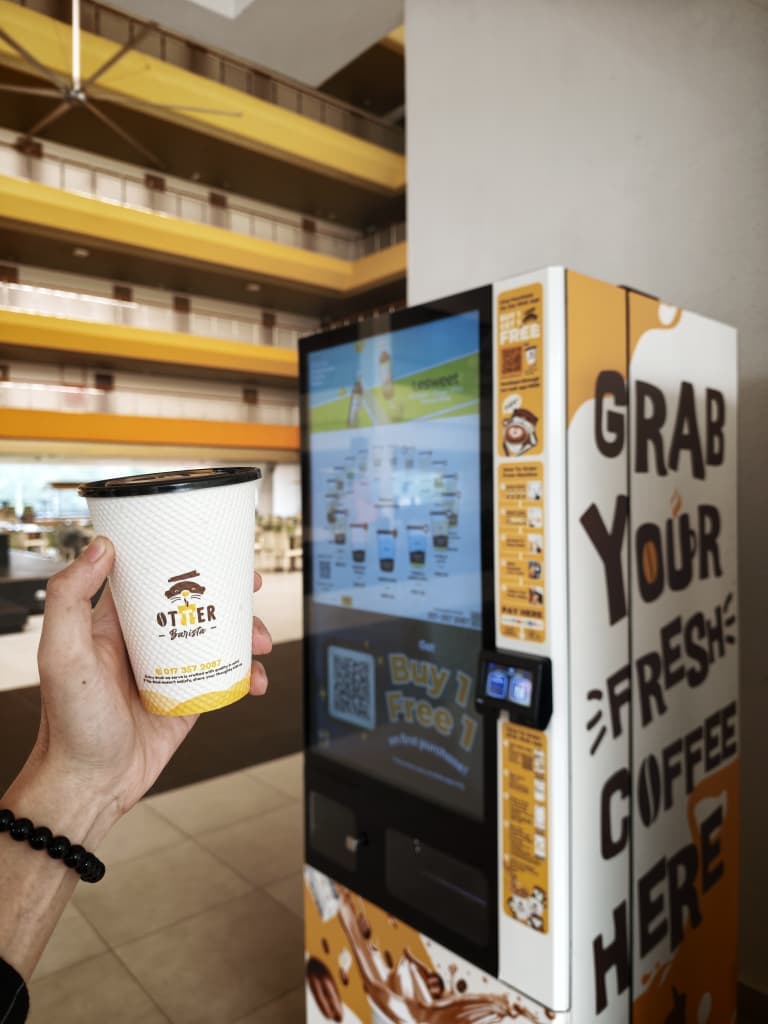
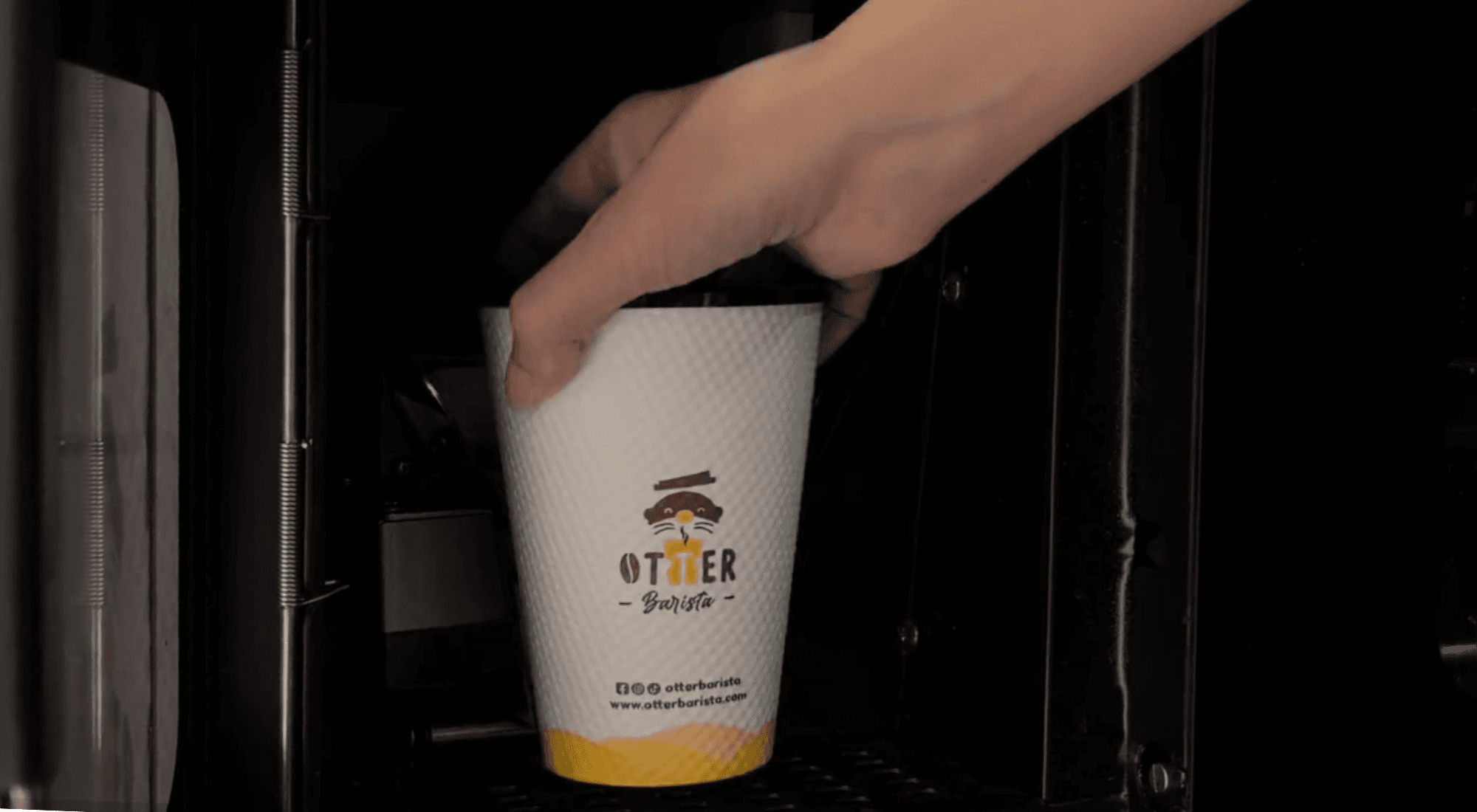
Bean-to-cup machines grind fresh beans for every cup. They produce espresso-based drinks, from a plain americano to a flavoured latte, at the press of a button. The output quality is consistent because the grind is always fresh. These are the machines closest to what you get at a café counter. They do require regular cleaning and restocking of beans, milk (or milk powder), and other ingredients, but the drink range is wide and the quality holds up. This is the category Otter Barista's robotic baristas operate in.
Traditional espresso machines are what you see in cafés staffed by trained baristas. They produce excellent results in the right hands, but they are not practical for most office settings because they require a skilled operator. Unless you are planning to hire a dedicated in-house barista, this type is probably not the right fit.
Drip filter machines are simple and low cost. They brew a jug of filter coffee and keep it warm. The output is limited (no lattes, no espresso) and quality degrades the longer the jug sits. For a small team that only wants plain black coffee, they can work. For anything more, they fall short quickly.
Capsule machines use pre-portioned pods and are easy to operate. The per-cup cost is higher than bean-to-cup, the drink range is narrower, and you produce a significant amount of single-use pod waste. They work for very small offices with low volume. They do not scale well.
For most Malaysian businesses with more than 20 to 30 people, a bean-to-cup commercial coffee machine hits the best balance of drink quality, variety, and consistency.
Buy, rent, or managed placement: the three real options
Once you know what type of machine you want, the next decision is how you get it. There are three real models available to Malaysian businesses.
Buying outright means you own the machine. You pay a large upfront cost, you manage consumables, and you own every repair bill. If something goes wrong at 8am on a Monday, you are the one finding a technician. Some businesses prefer this because they want control. The honest tradeoff is that ownership comes with ongoing admin and unpredictable repair costs.
Renting gives you a machine for a fixed monthly fee. This spreads the cost and is easier to budget. The catch is that rental contracts vary a lot in what they cover. Some include full maintenance, some include only parts, and some leave labour to you. Read the fine print before you sign.
Managed placement is a different model entirely. With Otter Barista's Host arrangement, we place a robotic barista at your location at no cost to you. We deploy it, stock it, and service it. You receive a fixed monthly rental from us as the location host. You do not manage consumables, you do not call a technician, and you do not handle operations. We do all of that. For building managers, office admins, and facility owners who want coffee available without adding to their workload, this model often makes the most sense. You can read more about how it works on our place a machine page.
If your business wants to cover the coffee cost directly as a staff benefit, our office coffee pantry model is worth looking at instead. That one puts us in charge of supply and service while your team gets café-style coffee as part of the working day.
What to check before you commit to anything
Whatever route you take, these are the questions worth asking before you sign or agree to anything.
Capacity. How many cups per hour can the machine handle at peak? Match that against your team size and your busiest times. A machine that queues for 20 minutes at morning break is not solving your problem.
Maintenance schedule. How often is the machine cleaned and restocked? Who does it, and how do you contact them when there is an issue?
Consumables. Who supplies beans, milk, syrups, and cups? How often are they restocked? Running out of milk at 3pm is a small but very visible failure.
Installation requirements. Does the machine need a plumbed water line? What is the power draw? Is there drainage required? These are practical questions that can affect where the machine can physically go in your building.
Contract terms. What is the notice period if you want to end the arrangement? What happens if the machine needs to be replaced? Is there a minimum term?
For a fuller breakdown of what these decisions typically cost in Malaysia, the article on how much does an office coffee machine cost in Malaysia goes through the numbers in plain language.
The part most buyers overlook: who services it when something goes wrong
This is where most commercial coffee machine decisions unravel after the fact. The machine install goes fine. The first few weeks are good. Then a sensor error appears, or the grinder sounds different, or the drink quality drops and nobody knows why.
At that point, who you call and how fast they respond is everything.
At Otter Barista, this is where we put most of our energy. The technology is the easy part. The hard part is the team that services every machine every week. We have a technician who answers a late-night message about a machine that is tasting off. We get replacement parts to machines in other cities fast when something fails. We do not install and disappear.
We are also honest about what our machines use. The coffee is a blend of Brazilian and Indian Arabica, roasted locally in Malaysia. The milk is dairy powder from New Zealand. That is a deliberate choice. Powder holds quality better than fresh milk sitting in a machine for days. We tested both and the powder won. We say this plainly because we think buyers deserve to know exactly what they are getting, and because the quality of the drink in the cup backs it up.
For buyers comparing options for healthcare or hospital settings, the article on coffee machines for healthcare facilities covers some of the specific considerations for those environments.
How the robotic barista model works and where it fits
Otter Barista operates a growing fleet of robotic baristas across Klang Valley, Penang, Perak, and Pahang. Our machines sit in offices, hospitals, universities, and corporate and government buildings, places where people already spend long hours and where good coffee makes a real difference.
The drink menu covers the full range of espresso-based and flavoured drinks, hot or cold, with adjustable sugar levels. Espresso, americano, latte, vanilla latte, hazelnut latte, salted caramel latte, matcha latte, caramel macchiato, mocha, dirty matcha, hot chocolate, and more. Every cup grinds fresh Arabica beans to order.
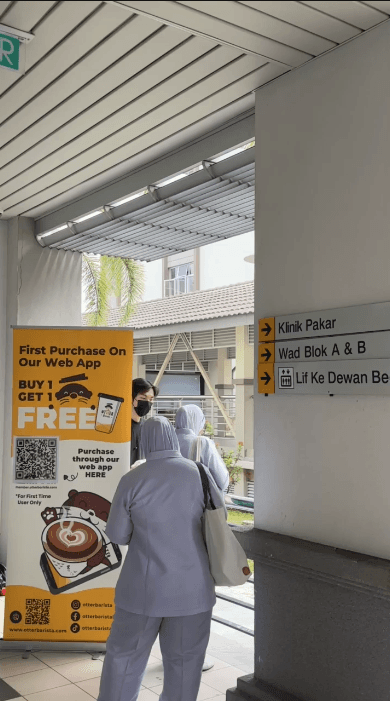
We also run a loyalty and ordering web app at member.otterbarista.com, so regular users can order ahead and build up rewards without any extra hardware on your side.
For businesses comparing coffee service options more broadly, the article on coffee machines for business is a useful reference.
Getting started: what to ask for and how to reach us
If you are at the stage of comparing commercial coffee machine options for your workplace, here is what we suggest.
First, get clear on your volume and your situation. How many people will use it daily? Do you want coffee as a staff benefit you pay for, or are you open to a placement model where the machine is self-funding? Do you have a specific location in mind, and does it have access to power and water?
Then reach out and ask the right questions. Any serious operator should be able to tell you exactly what the machine needs to run, who handles maintenance, and what happens if something breaks. If the answers are vague, that is useful information.
If you want to talk through what makes sense for your building or office, you can reach us on WhatsApp at +60 17 357 2087 or email hello@otterbarista.com. We will ask a few questions about your situation and give you a straight answer, no pressure, no sales script.
Or if you are ready to explore having a robotic barista placed at your location, visit our place a machine page and we will take it from there.