Barista coffee machines for Malaysian workplaces: what you actually need to know
When people search for barista coffee machines, they are usually one of two types of buyer. The first is someone setting up or upgrading a café or food and beverage outlet, looking to spec the right commercial equipment. The second, and honestly the more common one in the B2B world, is an office manager, HR lead, or facilities person who just wants good coffee at work without running a full café operation. This article is written for both, but it spends more time on the second group, because that is where the real gap usually sits.
The main types of barista coffee machines
Understanding the landscape helps you ask the right questions before spending anything.
Semi-automatic machines are what most people picture when they think of a proper café setup. The machine controls water temperature and pressure. Everything else, including grinding, dosing, tamping, and shot timing, is done by the operator. The output can be excellent, but it depends almost entirely on the skill of the person using it. Consistency varies from person to person, and even from shift to shift with the same person.
Volumetric machines step things up slightly. They automate the volume of water per shot, which takes one variable out of the operator's hands. But the grind, dose, and tamp are still manual. You still need a skilled person at the machine every day.
Super-automatic or bean-to-cup machines automate the full process: grinding, dosing, tamping, extraction, and milk frothing in many models. The operator role shrinks to loading beans, filling the milk container, and keeping the machine clean. Output is consistent across users. These are the machines that sit closest to what a robotic barista does, though a managed robotic barista goes further by removing even the restocking and maintenance burden from the location entirely.
Each category involves real tradeoffs in cost, skill requirements, and output control. None of them is the wrong answer in the right setting.
What the real costs look like for barista coffee machines
The purchase price of any commercial machine is the number that gets quoted first and the number that matters least when you think about total cost of ownership.
Here is what actually adds up:
The grinder. Many commercial espresso machines do not include a grinder, and the grinder matters enormously for shot quality. A serious commercial grinder is a meaningful additional cost on top of the machine itself.
Water filtration. Malaysian tap water varies a lot, and without proper filtration, you risk both poor-tasting coffee and scale buildup that shortens the machine's life. Filtration systems, filter cartridges, and periodic water testing are real ongoing costs that buyers often overlook.
Installation and commissioning. Getting a commercial machine plumbed in and calibrated is not a DIY job. Factor in the cost of a qualified technician for setup.
Preventive maintenance and parts. Group head gaskets, shower screens, solenoid valves, steam wand tips, boiler elements: commercial machines have parts that wear. A maintenance contract or a reliable service partner is not optional if you want consistent output. Parts availability matters too, especially for machines where local support is thin.
Staff or training. We will cover this in more detail below, but for any machine that requires manual operation, the cost of the person running it is a real line item, whether that is a dedicated barista or the time spent training your office staff.
For a more grounded look at how these costs stack up in the Malaysian context, this breakdown of office coffee machine costs in Malaysia is worth reading before you make any decisions.
The staffing question most buyers overlook
This is the part of the conversation that rarely comes up in a product brochure, but it is often the thing that determines whether a traditional machine works in a workplace setting.
A semi-automatic or volumetric espresso machine needs someone who genuinely knows what they are doing. Grinding to the right consistency for the day's humidity. Dosing accurately. Tamping evenly. Pulling the shot and stopping it at the right time. Texturing milk without scorching it. These are not complicated skills, but they take real time to develop, and they degrade quickly without daily practice.
Most offices do not have that person. They have someone willing to try, which produces inconsistent results and often ends with the machine sitting unused after a few months because "it just stopped making good coffee." That is almost always a skill gap, not a machine fault.
The staffing question applies to cleaning too. Commercial machines need daily backflushing, weekly deep cleaning, and regular descaling. A machine that is not cleaned properly produces bad coffee and breaks down faster.
If you are opening a café with trained staff, this is manageable. If you are an HR manager trying to improve the office pantry experience, it is worth thinking honestly about whether you have the right setup to run a traditional machine well.
Renting versus buying: what Malaysian B2B buyers are choosing
The shift toward renting or managed coffee equipment is real, and it makes sense for most workplace settings.
Buying means upfront capital expenditure, which requires budget approval and ties up funds in depreciating equipment. It means finding and managing your own service partner. It means carrying the risk when volumes change, staff leave, or the machine needs a major repair. If your headcount doubles or halves, you own the same machine regardless.
Renting or using a managed placement model changes the structure entirely. No upfront cost. Maintenance and servicing included. The flexibility to adjust as your business changes. The risk stays with the service provider, not with your finance team.
For offices, clinics, campuses, and corporate buildings in Malaysia, a managed model tends to be the more practical choice. For a fuller look at how this plays out, coffee machine rental in Malaysia walks through the options in more detail.
If you are weighing whether the investment makes sense at all, this honest look at whether office coffee machines are worth it covers the real considerations without overselling.
How a robotic barista fits into this picture
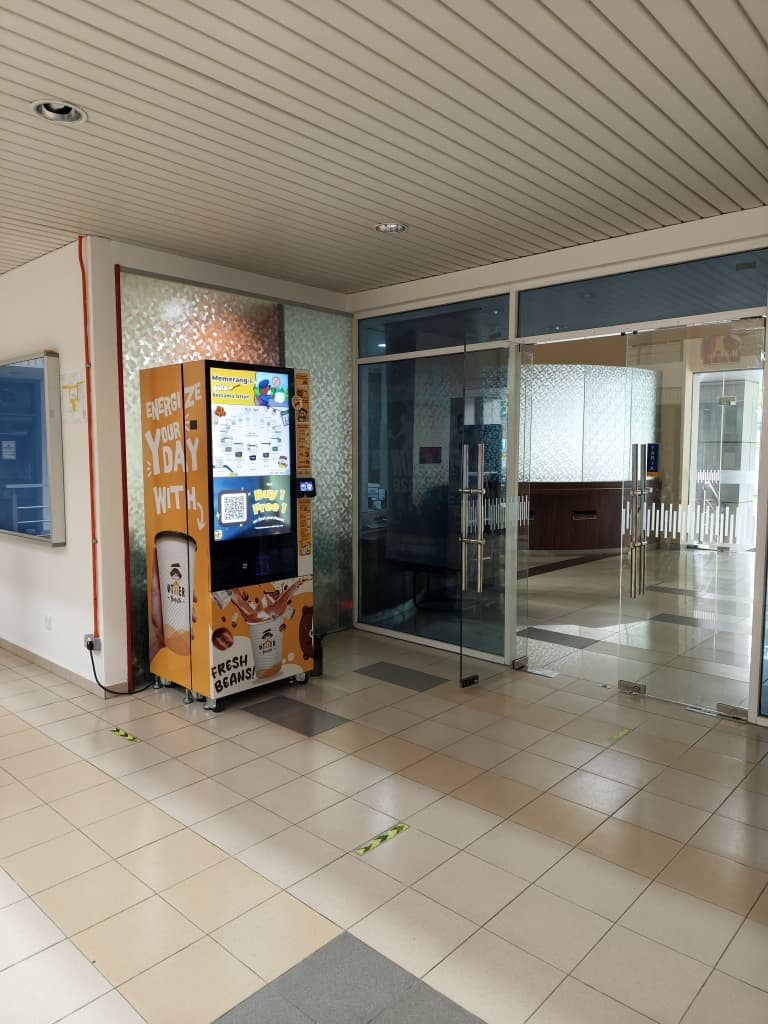
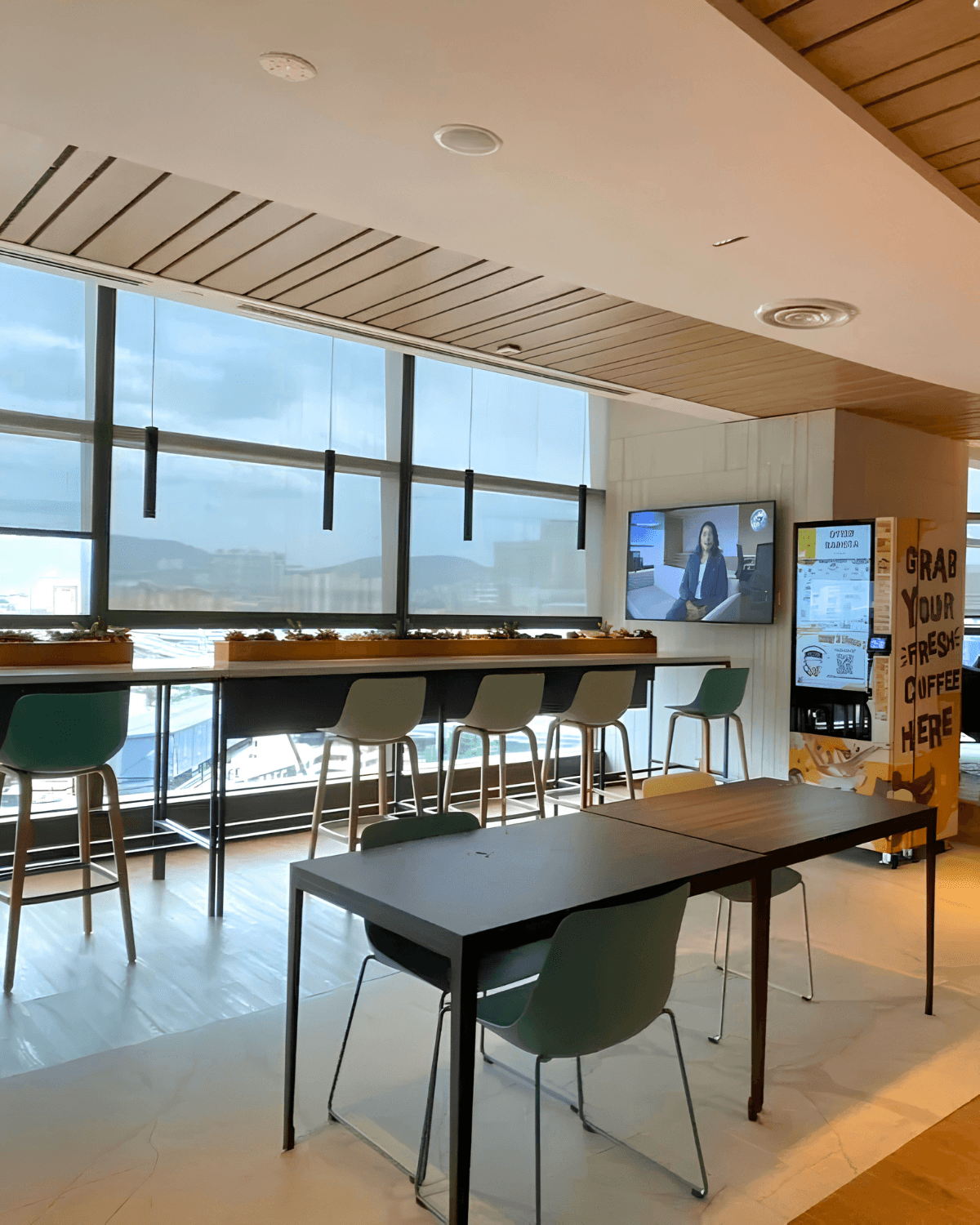
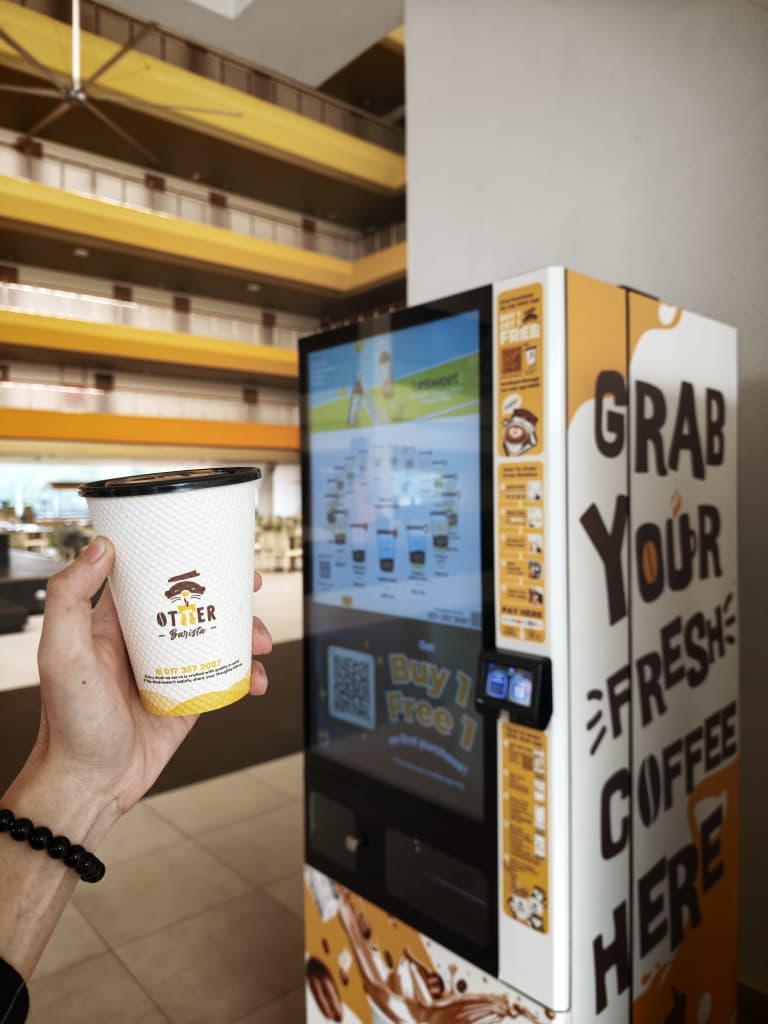
Otter Barista places fully managed robotic baristas in workplaces across Klang Valley, Penang, Perak, and Pahang. The machines grind fresh Brazilian and Indian Arabica beans, roasted locally in Malaysia, and pull real espresso shots on the spot. No trained operator is needed at the location. No restocking or servicing falls on your team.
The drink menu covers the full espresso-based range: espresso, americano, latte, café latte, flavoured lattes (vanilla, hazelnut, salted caramel, matcha, the Ottersaur latte), caramel macchiato, mocha, dirty matcha, hot chocolate, and a babyccino. Every cup uses freshly ground beans. The milk is New Zealand dairy powder, a deliberate choice because it holds quality better than fresh milk sitting in a machine between service visits. We tested both. The powder won.
The service model matters as much as the hardware. Our team services every machine regularly. When something goes wrong, a technician follows up directly. When a sensor fails on a machine in another city, we get the part there fast. The technology is straightforward. The consistent care behind it is what keeps the coffee good.
For locations that want to offer the machine as a revenue-generating amenity, our Host model places the machine at your site at no cost to you, and you receive a fixed monthly rental. We handle everything: deployment, stocking, and servicing. For offices where the business covers the coffee as a staff benefit, our Pantry model keeps the machine stocked and running without your team touching the operations.
How to decide what is right for your situation
Here is an honest guide, with no upsell attached.
A high-volume café or food and beverage outlet with trained staff already in place may well benefit from a traditional semi-automatic or volumetric machine. The control it offers is real, and experienced baristas will get good results from it. The total cost of ownership is higher, but the volume justifies it.
An office, clinic, campus, or corporate building that wants reliable, consistent coffee without managing equipment, staff, or consumables is exactly where a managed robotic barista makes practical sense. The output is consistent, the overhead is minimal, and the support is ongoing.
An organisation planning an event in Klang Valley, Penang, Perak, or Pahang can also use Otter Barista on a day-rate basis through our Events model, which brings the same fresh-ground quality to conferences, trade shows, and corporate functions.
If you are still figuring out the right fit for your location, this guide to office coffee machines in Malaysia covers the buyer's journey in more detail.
Talk to us about your location
If you are thinking through what kind of coffee setup actually makes sense for your office, building, or campus, we are happy to talk it through without any pressure to commit.
You can reach us on WhatsApp at +60 17 357 2087, by email at hello@otterbarista.com, or find out more about placing a machine at your location. Tell us a bit about your setup and we will tell you honestly whether we are the right fit.