Coffee machines for business: a straight-talking buyer's guide
If you are an office admin, an HR manager, or a facilities person tasked with sorting out coffee for the team, you already know the real problem. It is not finding a coffee machine. It is finding one that actually works every morning without becoming your personal responsibility to stock, fix, and manage. Choosing coffee machines for business is less about the hardware and more about the full picture behind it.
This guide walks you through how to think about the decision honestly, from machine type to cost model to the question everyone forgets to ask until it is too late.
What does 'coffee machines for business' actually mean?
When someone searches for coffee machines for business, they are usually not a procurement officer shopping for specs. They are a person who just wants the coffee to work. Every morning. Without hassle.
The machine is one part of that. The coffee supply is another. Maintenance is another. And whoever answers when something goes wrong at 7am is the part that actually determines whether this was a good decision.
Buying a machine is easy. Running one well over 12 months is the harder thing. That is the frame to keep in mind as you read through the options below.
Bean-to-cup, capsule, or instant: which type fits an office?
There are three broad categories of office coffee machines, and the honest trade-offs between them matter.
Bean-to-cup machines grind fresh beans and pull real espresso shots on the spot. The cup quality is close to what you would get from a café barista. These machines are more complex, which means more to service and calibrate, but the output is genuinely good.
Capsule machines are compact, consistent, and simple to operate. Each cup uses a sealed pod, which controls quality well. The trade-offs are real though. Variety is limited to whatever capsules you stock, costs per cup add up over time, and the plastic waste is a genuine concern for offices with sustainability commitments.
Instant machines mix powder with hot water. They are low cost, low maintenance, and the cup quality reflects that. They work fine for a small team that wants hot caffeine and is not fussed about the experience.
For most offices with 20 or more people who care about what they drink, a bean-to-cup style machine delivers a noticeably better result. The question then becomes who manages it.
How much coffee does your office actually need?
Sizing matters more than most buyers realise.
A small team of under 30 people has very different daily cup volume from a corporate floor of 150 to 200. But it is not just about headcount. Think about these questions:
- When does demand peak? If everyone arrives at 9am and queues at the same time, throughput speed matters. A machine that takes 90 seconds per cup is fine for a staggered team and frustrating for a morning rush.
- What drinks do people want? A team that mostly drinks black coffee needs something different from one that orders lattes and flavoured drinks.
- How much space is available? Some smart coffee machines are compact enough for a pantry shelf. Others need a proper counter area with drainage.
- Who will be near the machine? An office machine is used differently from one in a hospital corridor or a university common room. The location shapes the volume and the wear.
If you are unsure, give us the rough numbers and we will help you work it out. There is no single right answer, it depends on your team.
Buy, rent, or let someone else run it entirely: the three cost models explained
This is where most buyers make a decision they later regret, usually because they did not think through the full cost.
Outright purchase means you own the machine. You pay upfront, or you finance it. You are also responsible for servicing, repairs, restocking, and calibration. This works well if you have the capital, someone in-house who can handle or coordinate maintenance, and a relationship with a supplier for beans and consumables. If none of those are true, the ongoing burden lands on whoever drew the short straw.
Rental or lease bundles the machine with some level of support and spreads the cost across monthly payments. The level of service varies widely depending on the provider. Some include maintenance. Some do not. Read the fine print carefully.
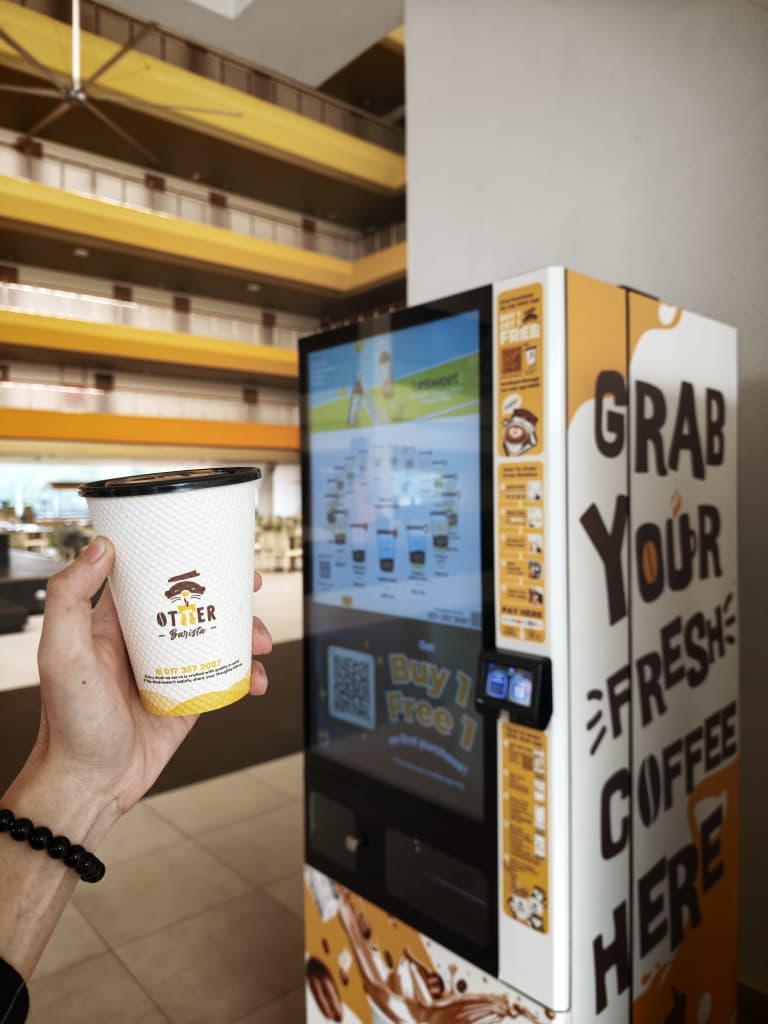
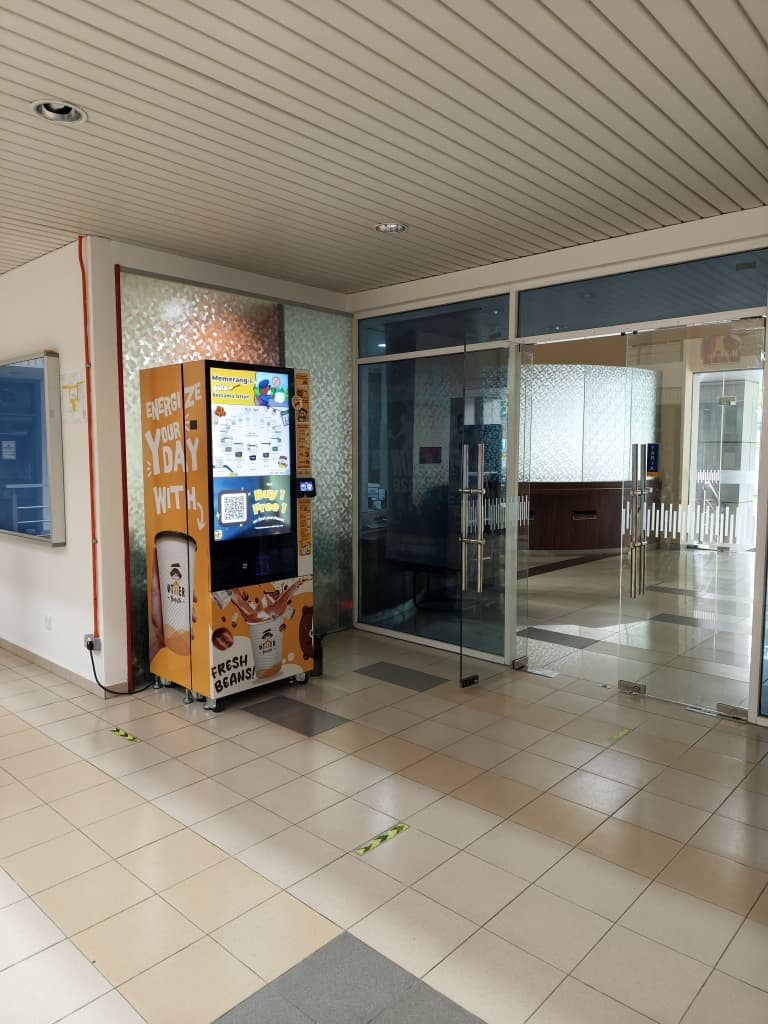
Fully managed placement, which is the model Otter Barista offers as the host arrangement, works differently. We place a robotic barista at your location at no cost to you. We handle deployment, stocking, and all ongoing servicing. The location owner receives a fixed monthly rental. The coffee is available to your team or visitors, and your involvement is essentially zero. This is not a revenue share. It is a fixed monthly rental paid to you, regardless of how many cups are sold.
Who does this suit? Locations where foot traffic makes a public-access machine worthwhile. Offices, clinics, condos, campuses. If you want café-quality coffee at your location without any operational burden, this is the model worth looking at. You can read more about how the host model works at /place-a-machine.
For offices that want coffee specifically for their own team, our pantry model covers that. You cover the cost, we keep it stocked and running.
Who looks after the machine when something goes wrong?
This is the question buyers forget to ask. It is also the most important one.
Every coffee machine has bad days. Sensors fail. Grinders need calibration. The milk system needs cleaning. If your machine is down on a Monday morning and you are responsible for fixing it, you will spend part of your week managing a coffee machine instead of your actual job.
With Otter Barista, that is our problem. Our team services every machine on a regular schedule. When something breaks between visits, someone from our team responds. We have had technicians answer late-night messages about a machine that started producing off-tasting cups. We have dispatched replacement parts to a machine in another city when a sensor went out. The details matter because they are what keeps your coffee running.
This is, genuinely, the thing we think separates a good coffee setup from a frustrating one. The technology in a robotic barista is not magic. What makes it work consistently is the team behind it. We look after our machines. We do not install and disappear.
What Otter Barista actually does, and where we operate
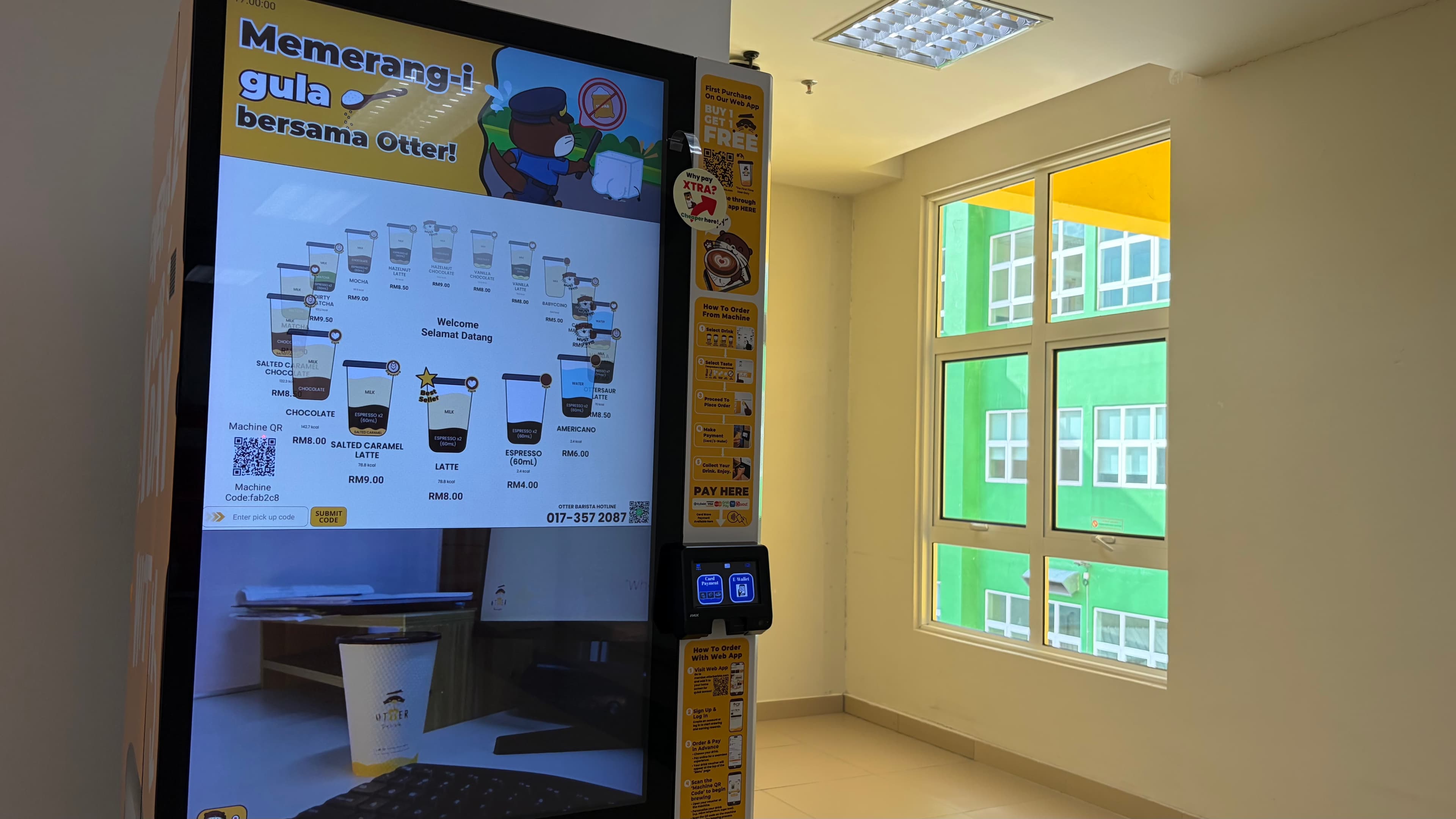
Otter Barista is a Malaysian robotic barista company, based in Subang Jaya, Selangor, founded in 2021. We place fully automated coffee machines in workplaces and public locations, and we stock and service them ourselves. Every machine grinds fresh beans and pulls real espresso shots on the spot.
The coffee uses a blend of Brazilian and Indian Arabica, roasted locally in Malaysia. The milk is New Zealand dairy powder. We chose powder deliberately because it holds quality better than fresh milk sitting in a machine for days. We tested both options. The powder produced a more consistent result. We are upfront about that because we think honest trade-offs earn more trust than polished claims.
We work with businesses across four models:
- Host: we place a public-access robotic barista at your location. We run everything. You receive a fixed monthly rental.
- Pantry: café-quality coffee for your team. You cover the cost, we handle stocking and servicing.
- Events: coffee for weddings, conferences, trade shows, and corporate functions, with day rates available. See more at /coffee-for-events.
- Partner: brand partnerships, machine wraps, and digital ad slots across high-traffic locations.
We currently operate in Klang Valley, Penang, Perak, and Pahang.
If you manage a hospital or healthcare facility, we have specific experience there too. You can read about that at /coffee-machine-for-hospitals.
How to choose the right setup for your business
Here is a short checklist to help you land on the right answer.
Daily cup volume. Estimate how many cups your team or location needs per day. Scale matters for machine size and restocking frequency.
Space available. Measure the footprint before you commit to anything. Know whether you have drainage access and a power point nearby.
Budget model. Do you have capex to buy outright, or does a monthly model work better for your budget cycle? Be honest about this.
Who handles maintenance. If nobody on your team wants to own the machine day to day, a fully managed model removes that entirely.
What the coffee is for. Is it a staff benefit, a visitor-facing amenity, or a public-access service? The answer changes which model fits.
If you work through this list and the answer keeps pointing toward someone else running the machine, that is what we do. You can reach us on WhatsApp at +60 17 357 2087 or by email at hello@otterbarista.com. We will ask a few questions, figure out what fits your location, and give you a clear picture of what it looks like.
No pressure. Just a practical conversation.
Find out how the host model works and whether your location qualifies.