Coffee machines for healthcare facilities: a practical guide for facility managers
Getting good coffee into a healthcare facility is a more specific problem than getting it into a regular office. Coffee machines for healthcare facilities need to work in environments where clinical staff are stretched, hygiene standards are non-negotiable, and nobody has time to babysit a machine. This guide walks through the real considerations, zone by zone and question by question, so you can make a grounded decision.
Why a standard office setup often falls short in a clinical environment
In a typical office, someone usually takes informal ownership of the coffee machine. They restock it, wipe it down, call the supplier when something goes wrong. It is not in their job description, but it happens.
In a hospital or clinic, that person does not exist. Nurses are managing patient care. Administrators are managing patient flow. Nobody has the bandwidth to be the coffee machine person.
This means the servicing model matters far more than the machine spec. A machine that looks great on a spec sheet but requires daily staff attention is a machine that will be switched off within a month.
The other pressure is footfall. Busy wards, waiting rooms, and staff canteens see a lot of traffic. The machine needs to handle back-to-back orders reliably, not just first thing in the morning.
The three zones and what each one needs in a healthcare setting
Not every part of a facility has the same requirement. A robotic barista is flexible enough to serve different zones, but placement and configuration should reflect the actual need in each spot.
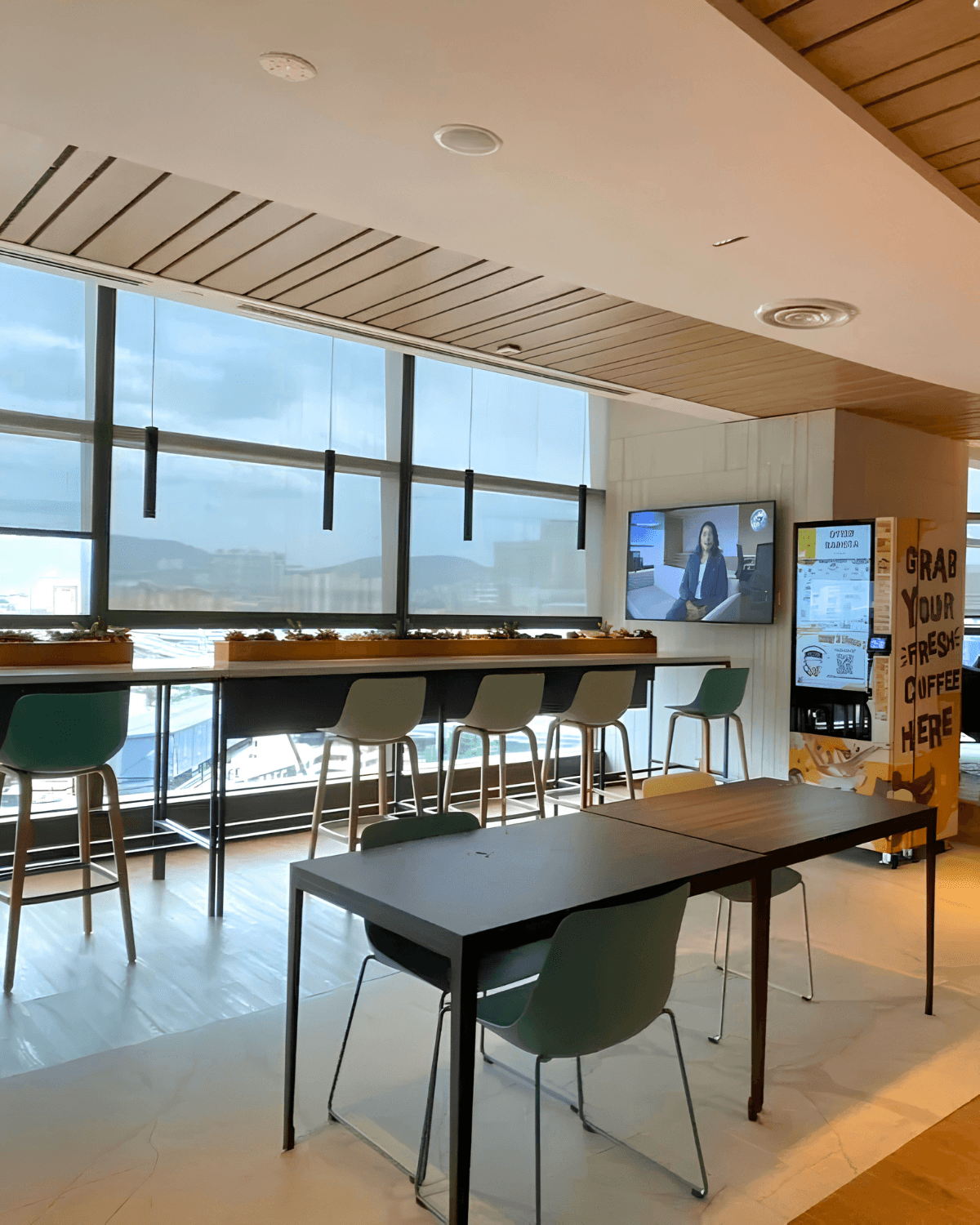
Staff breakrooms and canteens. Speed and volume are the priority here. Nurses and doctors often have short, unpredictable breaks. They need a machine that dispenses a proper coffee in under a minute, handles multiple orders in a row without cooling down, and does not require any setup. A robotic barista fits this exactly: fresh beans ground per cup, consistent output, no barista needed.
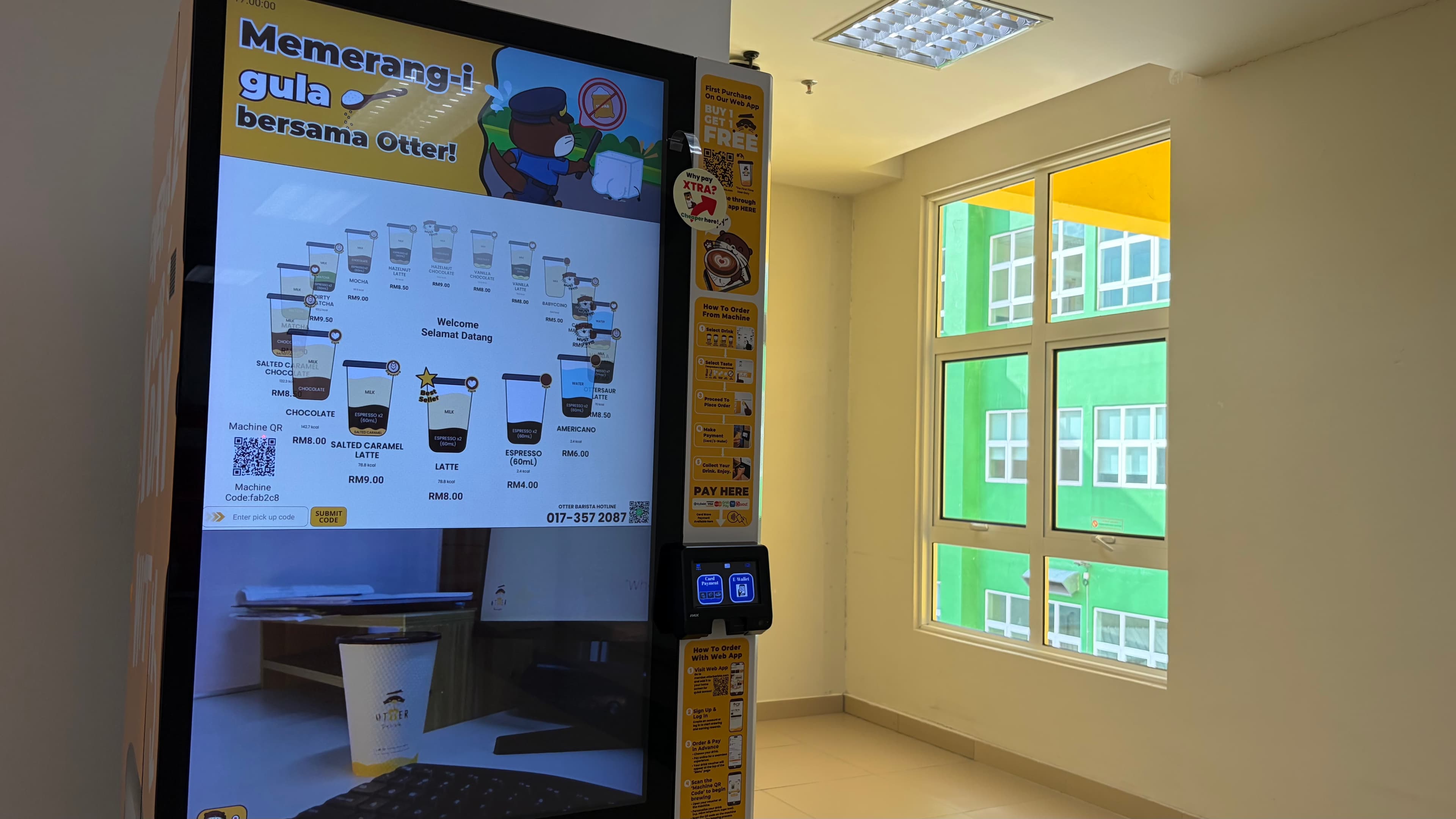
Waiting rooms and public areas. The need here is different. Visitors and patients want something approachable and low-effort. A touch-screen interface with clear drink options, adjustable sugar, and a range from a simple americano to a hazelnut latte covers most preferences. Low-contact payment and ordering options also reduce unnecessary surface interaction, which matters in a clinical building.
Ward-level or nurse station spots. Space is tight and reliability is critical. A compact smart coffee machine placed close to where staff actually work means shorter trips and more time on the ward. The machine needs to be dependable enough that a nurse on a 12-hour overnight shift can count on it.
What to look for in the machine itself
When you are evaluating coffee machines for healthcare facilities, here are the practical questions worth asking:
Fresh-ground beans or powder? A machine that grinds fresh Arabica beans per cup produces noticeably better coffee than one using pre-ground powder or capsules. In a high-use environment where staff drink multiple coffees a day, quality compounds quickly. Otter Barista machines use a locally roasted Brazilian and Indian Arabica blend, ground fresh for each cup.
Drink variety. A diverse workforce has diverse preferences. Some staff want a straight espresso or americano. Others want a latte or a flavoured drink. A machine with a genuine menu, from plain espresso to caramel macchiato to dirty matcha, serves more of your team without anyone feeling like they drew the short straw.
Adjustable sugar and strength. Healthcare workers often have strong preferences here, and these settings reduce the workaround of people adding extra sachets or ignoring the machine entirely.
Compact footprint. Floor space in a clinical building is usually accounted for. Confirm dimensions with any provider before committing.
The servicing question is the real one
This is the section that matters most. Everything else is specification. This is operations.
Clinical staff cannot be expected to restock beans, clean group heads, descale boilers, or troubleshoot a machine mid-shift. If a coffee machine provider installs equipment and then expects your team to handle day-to-day upkeep, that is a problem that will show up on week three, not during the sales conversation.
The way Otter Barista works: we handle everything. Stocking, cleaning, servicing, and technical response. Our team services machines on a regular schedule. When something unexpected happens, the response is from us, not from your facilities desk.
A concrete example of what this looks like in practice: a technician on our team answers a late-night message about a machine that is not tasting right. Another example: when a sensor goes out in a machine in another city, we get the replacement part there fast rather than leaving the machine offline. That is the kind of operational behaviour that matters in a healthcare environment where the machine needs to work every day, not just most days.
You can read more about how this model works on our dedicated hospital coffee page.
How the host model works for healthcare facilities
If you are a hospital, clinic, care centre, or medical campus looking to add coffee without a capital expense, the Place a Machine host model is worth understanding clearly.
Otter Barista places the robotic barista at your location at no cost to the facility. We handle all deployment, stocking, and ongoing servicing. You receive a fixed monthly rental from us. Not a revenue share, not a percentage of sales. A fixed monthly amount.
There is no upfront machine purchase, no maintenance budget to plan for, and no operational burden on your staff. The facility earns from the machine without managing it.
This model is available across our four service regions: Klang Valley, Penang, Perak, and Pahang.
For more detail on how the host arrangement works, visit our Place a Machine page.
Hygiene and the powdered milk question: the honest answer
Healthcare buyers will ask about this, and they should. It is a fair question.
The milk used in Otter Barista machines is New Zealand dairy powder, not fresh milk. This is a deliberate choice, not a cost decision.
Here is the reasoning: a machine placed in a hospital breakroom or waiting area may sit between restocking visits for several days. Fresh milk in that environment creates a cold-chain management problem. It can spoil. It introduces variability in taste. We tested both fresh and powdered milk in our machines and the powder produced more consistent results over time.
In a clinical setting, dairy powder is actually the more sensible option. There is no refrigeration dependency, no spoilage risk, and the source is New Zealand dairy, which is a quality input. The tradeoff is that it is not fresh milk. We name that plainly because buyers deserve an honest answer, and because the reasoning holds up.
On hygiene more broadly, the machine itself is serviced regularly by our team. We clean and maintain it on schedule. We do not leave that to facility staff.
What to ask any coffee machine provider before you sign
Whoever you speak to about placing a smart coffee machine in your facility, these are the questions worth pressing on:
Does your team service the machine, or do we? If the answer involves your staff in any regular maintenance, that is a red flag for a clinical environment.
How quickly do you respond when something breaks? Ask for a real answer, not a policy document. What actually happens when a machine is offline at 2am?
Is the coffee Halal-certified? This is a common and reasonable requirement in Malaysian healthcare procurement. Ask the provider directly and get a current answer in writing.
What are the power and water requirements? This affects placement options, especially in older buildings with limited infrastructure points.
Who restocks, and how often? A machine that runs out of beans and sits empty is not serving anyone. Know the restocking schedule before you agree to placement.
Otter Barista's answer to each of these is: our team handles it. If you want to dig into the specifics for your facility, reach out and we will walk through it honestly.
You can also explore how we work with offices and similar environments on our office coffee page and browse further resources on our site.
Getting started: a low-pressure close
A nurse on a 12-hour shift deserves a decent coffee. So does every doctor, admin, visitor, and security staff member in your building.
If you are weighing whether a robotic barista makes sense for your facility, we are happy to talk through the specifics without any pressure to commit. Every facility is different, and the right placement and model depends on your layout, your team size, and how much foot traffic moves through each zone.
Get in touch via WhatsApp at +60 17 357 2087, email us at hello@otterbarista.com, or go straight to our Place a Machine page to start the conversation. We will give you a straight answer, not a sales pitch.