Office espresso machine: buy, rent, or let someone else run it?
If you have been searching for an office espresso machine, there is a good chance you are not really shopping for a machine. You are shopping for a way to stop your team from leaving the building for coffee three times a day, or trying to fix the situation where someone bought a machine two years ago and now it lives on a counter half-broken, furred with limescale, and nobody knows whose job it is to fix it.
The machine is not the hard part. The question underneath the question is: who is going to own this thing, and everything that comes with it?
This article walks through the real decision honestly, including tradeoffs that most suppliers prefer you not to think about.
What you are actually deciding when you look for an office espresso machine
Most offices reach this moment in one of a few ways. The instant coffee situation has become embarrassing. A new HR manager is trying to improve the workplace. Someone senior asked why the pantry has not been updated since 2017.
Whatever the trigger, the decision that follows is not really about specs. It is about responsibility. Every machine you bring into a workplace creates ongoing obligations: who buys the beans, who cleans the milk frother, who calls a technician when it stops working on a Monday morning, and who decides when the machine is too old to save.
Get clear on who is taking those obligations before you look at a single product page. That clarity will tell you more about which model is right for you than any feature comparison.
Bean-to-cup, pod, or traditional espresso: what suits an office pantry
Once you have thought about responsibility, the machine type is the easier conversation.
Pod machines are low maintenance and consistent, but the cost per cup adds up quickly at office volumes. You are also generating a lot of plastic waste, which some teams care about.
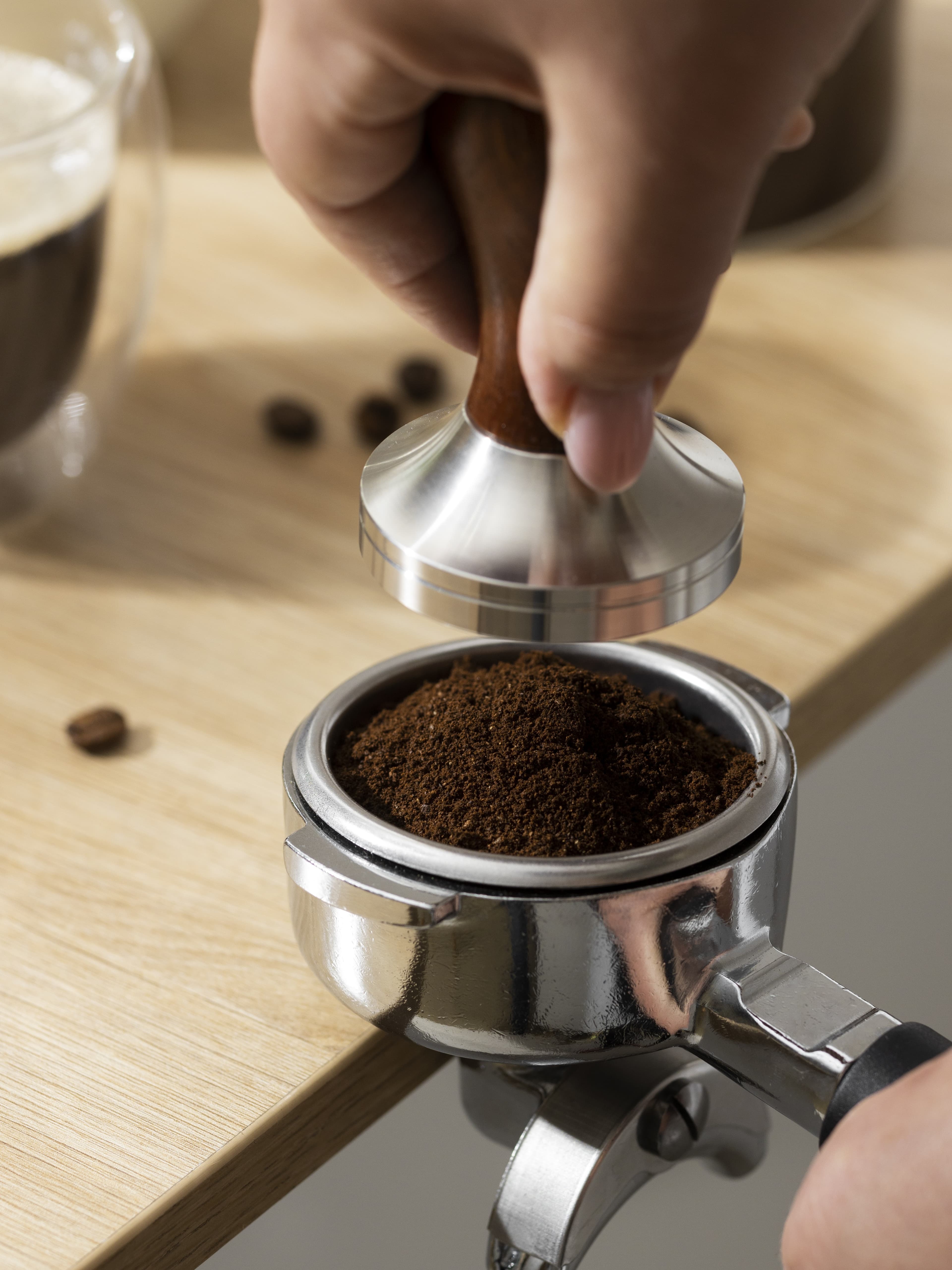
Traditional espresso machines (the kind with a group head, a portafilter, and a steam wand) produce excellent coffee, but they require someone who knows how to use them, clean them, and dial them in. In a café, that is the barista's job. In an office pantry, it becomes a volunteer role that usually falls to whoever cares most, until they leave the company.
Bean-to-cup machines sit in the middle. They grind fresh beans and pull shots automatically, so you get real espresso without needing a trained operator. The quality depends entirely on how well the machine is maintained and how good the beans are. This is where a managed service starts to make a lot of sense, because the machine is only as good as the team looking after it.
For most Malaysian offices, a bean-to-cup approach backed by a proper service model is the most practical answer. The coffee is good, nobody needs training, and the quality does not fall apart when the one person who knew how to use it goes on leave.
Buying outright vs renting vs a managed pantry service
Here is the honest breakdown.
Buying outright makes sense if you have the budget, a long time horizon, and someone in-house willing to handle maintenance. You own the asset, and over time the per-cup cost can be the lowest of the three options. The risk is that machines break, parts become unavailable, and maintenance is often deferred until the machine actually fails.
Renting spreads the upfront cost, which helps procurement. But read the contract carefully. Most rental agreements still leave day-to-day servicing, stocking, and cleaning with you. You are financing the hardware, not outsourcing the hassle.
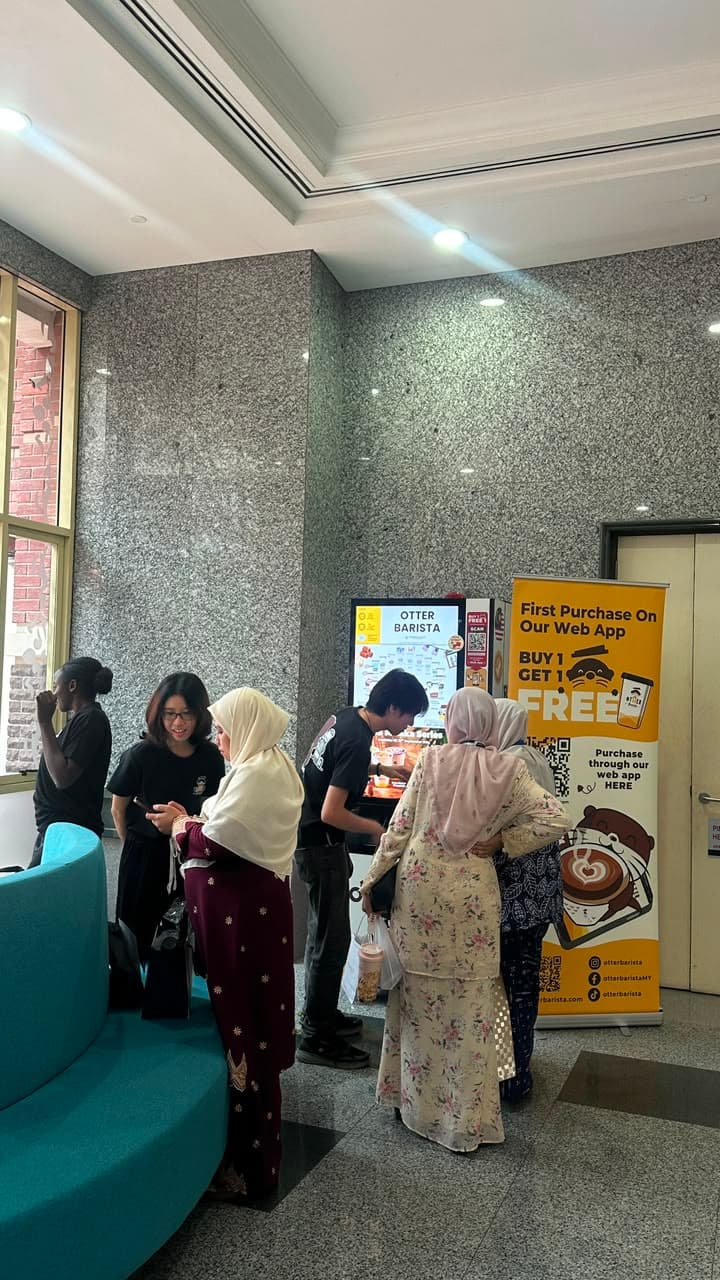
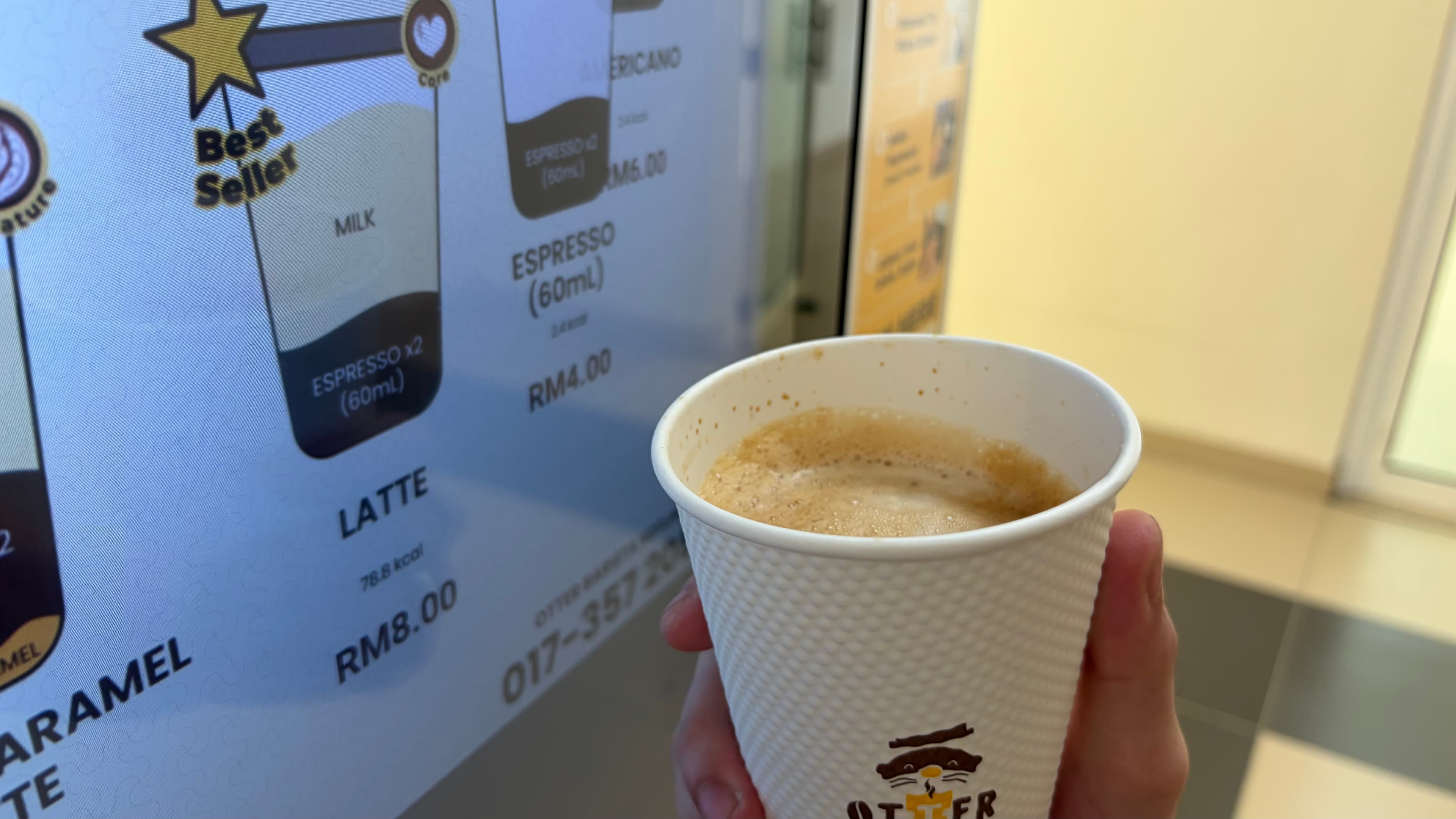
A managed pantry service is the third option that most offices do not immediately think of. You pay for the service, not the hardware. A supplier like Otter Barista supplies the robotic barista, stocks it with coffee, and services it on a regular schedule. Your team just uses it. When something goes wrong, it is not your problem to solve.
The tradeoff is that you have less control over the specific machine model, and you are committing to an ongoing relationship with the supplier. That is a real consideration. But for most offices, the time and energy saved on maintenance and sourcing outweighs the loss of control. Especially when you factor in the cost of your own team's time spent dealing with a broken machine.
If you want to understand exactly how the Pantry model works at Otter Barista, the office coffee page has the full picture.
How to size the right machine for your team
This is where a lot of offices make mistakes, usually by undersizing because the initial quote looks better.
The right size depends on a few things.
Headcount and usage patterns. A team of 20 in a single-shift office has different needs from a team of 80 spread across two floors with back-to-back meetings all morning. Think about peak demand, not average demand. If 40 people all want coffee between 8:30 and 9:30am, that matters more than the daily total.
Shift patterns. Offices that run shifts, hospitals, manufacturing facilities, or any location with people working outside standard hours, need a machine that is reliable around the clock. Demand does not follow a bell curve the way it does in a regular office.
Pantry footprint. Bench space, power points, and water access all constrain what is physically possible. A machine that technically handles your volume but cannot fit in your pantry is not the right machine.
The most useful thing you can do before making any decision is have a real conversation with whoever is going to service the machine. They will ask you these questions anyway, and the answers shape the recommendation. Our coffee machine for offices page is a useful starting point if you are based in the Klang Valley.
What to check before you sign anything
This section is for procurement teams who need to think beyond the spec sheet.
Servicing. Who comes when it breaks, how fast, and at what cost? These are not hypothetical questions. Machines do break. A supplier who cannot answer this clearly is telling you something important.
Beans and sourcing. Do you know what coffee you are actually getting? At Otter Barista, we use a blend of Brazilian and Indian Arabica, roasted locally in Malaysia. That is not vague. You can ask about the roaster, the blend, and when the beans were last rotated.
The milk question. In a fully automated machine, fresh milk is not practical. It spoils, it requires refrigeration, and it creates hygiene risks over time. Otter Barista uses New Zealand dairy powder. We are upfront about that because we believe powder, done properly, is the more honest choice for this format. We tested both and the powder produced more consistent results.
The Halal question. This comes up in almost every Malaysian corporate procurement process, and it should. If your organisation requires formal Halal documentation, the right move is to ask us directly rather than rely on what is written in an article. We will give you the current, accurate information for your specific requirements. Contact us on WhatsApp at +60 17 357 2087 or email hello@otterbarista.com and ask specifically.
Payment and ordering. Our machines are backed by a web app at member.otterbarista.com for ordering and loyalty. If your team's workflow matters here, it is worth raising during any conversation with us.
How Otter Barista's Pantry model works in practice
The Pantry model is straightforward. We supply a robotic barista for your office. We stock it with fresh-ground Arabica and keep it serviced. Your team uses it. You pay for the service.
You are not buying a machine. You are not managing a maintenance contract. You are not sending someone to Source the beans every month.
When a sensor acts up, our team gets the part to your machine fast. When stocks need replenishing, we handle it. The operations team at Otter Barista is the reason the coffee stays consistent, not the machine itself. The machine is the easy part. The people behind it are the hard part, and that is where we focus.
We currently operate across Klang Valley, Penang, Perak, and Pahang. If your office is in one of those regions, we can talk specifics.
Otter Barista has been featured by BFM and Vulcan Post, and was recognised among the top startups at the MyStartup Accelerator Demo Day in 2024. We are not a new idea chasing a trend. We have been at this since 2021, and the service model has been tested in real workplaces.
If you are also thinking about how this works for events or for a location where you want to offer coffee to visitors rather than just your own team, take a look at how the host model works or our events catering option.
Your next step
If you have read this far, you probably already know whether the Pantry model sounds right for your office. The next step is a conversation, not a commitment.
Tell us your team size, your location, and roughly what you are trying to solve. We will tell you honestly whether we are a good fit, what the service looks like in practice, and what you can expect on cost without putting a number in an article that might not apply to you.
Reach out on WhatsApp at +60 17 357 2087, email hello@otterbarista.com, or go straight to the office coffee page to get started.
Good coffee at work should not be a project. It should just work.