Office coffee machine vs instant coffee: an honest comparison for Malaysian offices
Most Malaysian offices run on 3-in-1 sachets and a kettle. It is a setup that works, nobody complains loudly, and the box gets refilled without much thought. But if you are the person responsible for the pantry, it is worth doing a genuine office coffee machine vs instant coffee comparison before assuming the sachet setup is the best you can do for your team.
This article walks through the real cost and quality picture on both sides. No hype, and no pretending there is an obvious winner for every office. The honest answer depends on your team size, your coffee culture, and how much of the logistics you want to manage yourself.
The default pantry setup and why offices stick with it
Boxes of 3-in-1 sachets, a kettle, and maybe a jar of something else. It is everywhere because it genuinely works at a basic level. Sachets are easy to reorder, easy to store, and require no maintenance. An office admin can sort the whole thing in ten minutes a week.
For a small team with low coffee volume, that simplicity is real value. We are not here to dismiss it.
But here is the honest question worth asking: are your people actually happy with it, or have they just stopped mentioning it? There is a difference between a pantry that satisfies and one that nobody bothers complaining about.
What instant coffee costs your office, the full picture
The obvious cost of the office coffee machine vs instant coffee question is the price per sachet. That number feels small. The full picture is a bit wider.
Consider how many cups your team drinks each day, then multiply that across the month. In a busy office with 40 or 50 people who each grab two or three sachets daily, the spend on boxes adds up faster than most admins track because it is spread across small restocking moments rather than one visible invoice.
Then there are the less visible costs. If the pantry coffee is underwhelming, some portion of your team will make a café run instead. That is time away from the desk, usually 15 to 20 minutes including the walk and the queue. Once a day for a handful of people, across a working month, that is a real chunk of productive time.
None of this is alarmist. It is just the full picture. When you add it up, sachets are not always the low-cost option they appear to be.
What a proper office coffee machine actually delivers
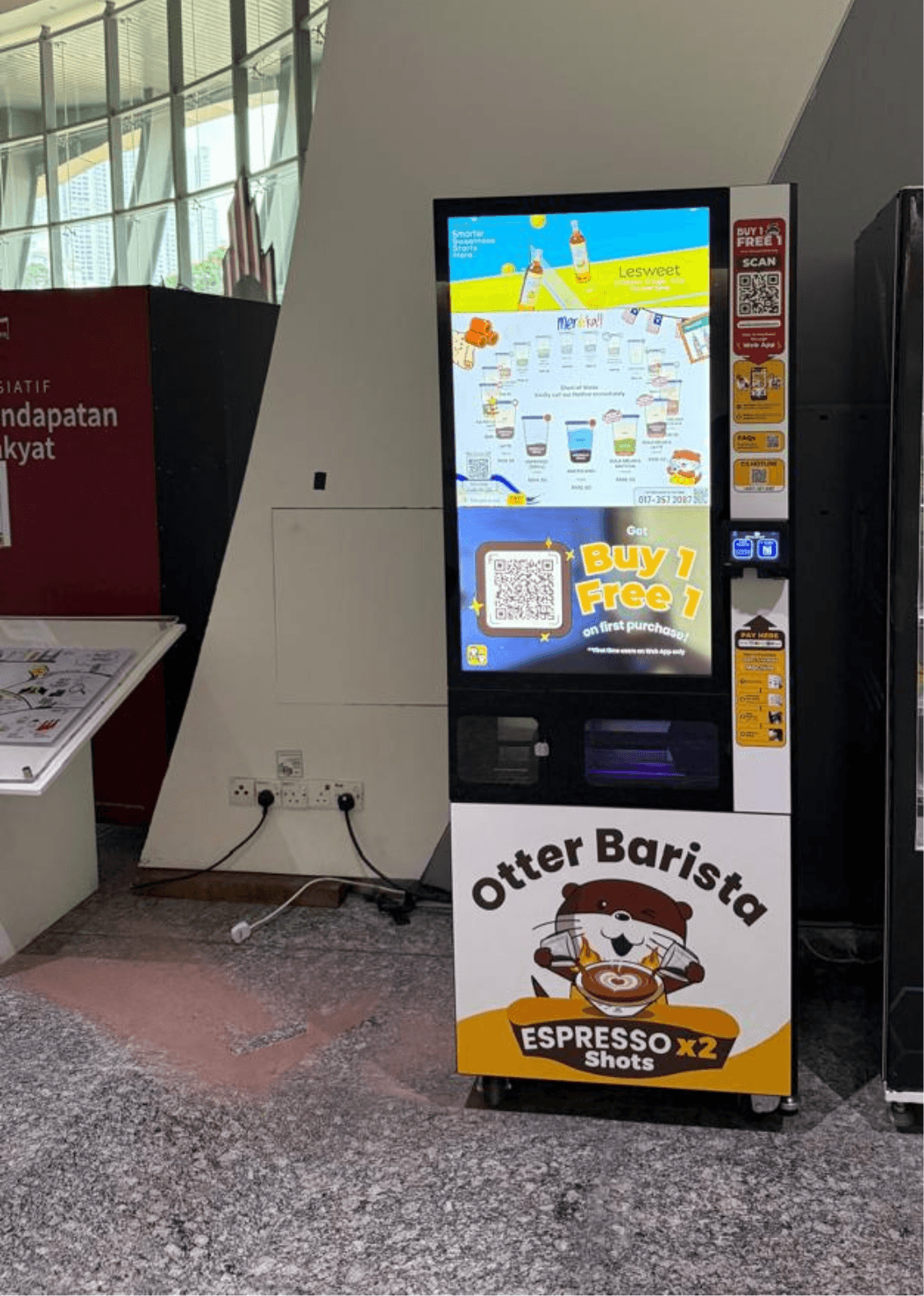
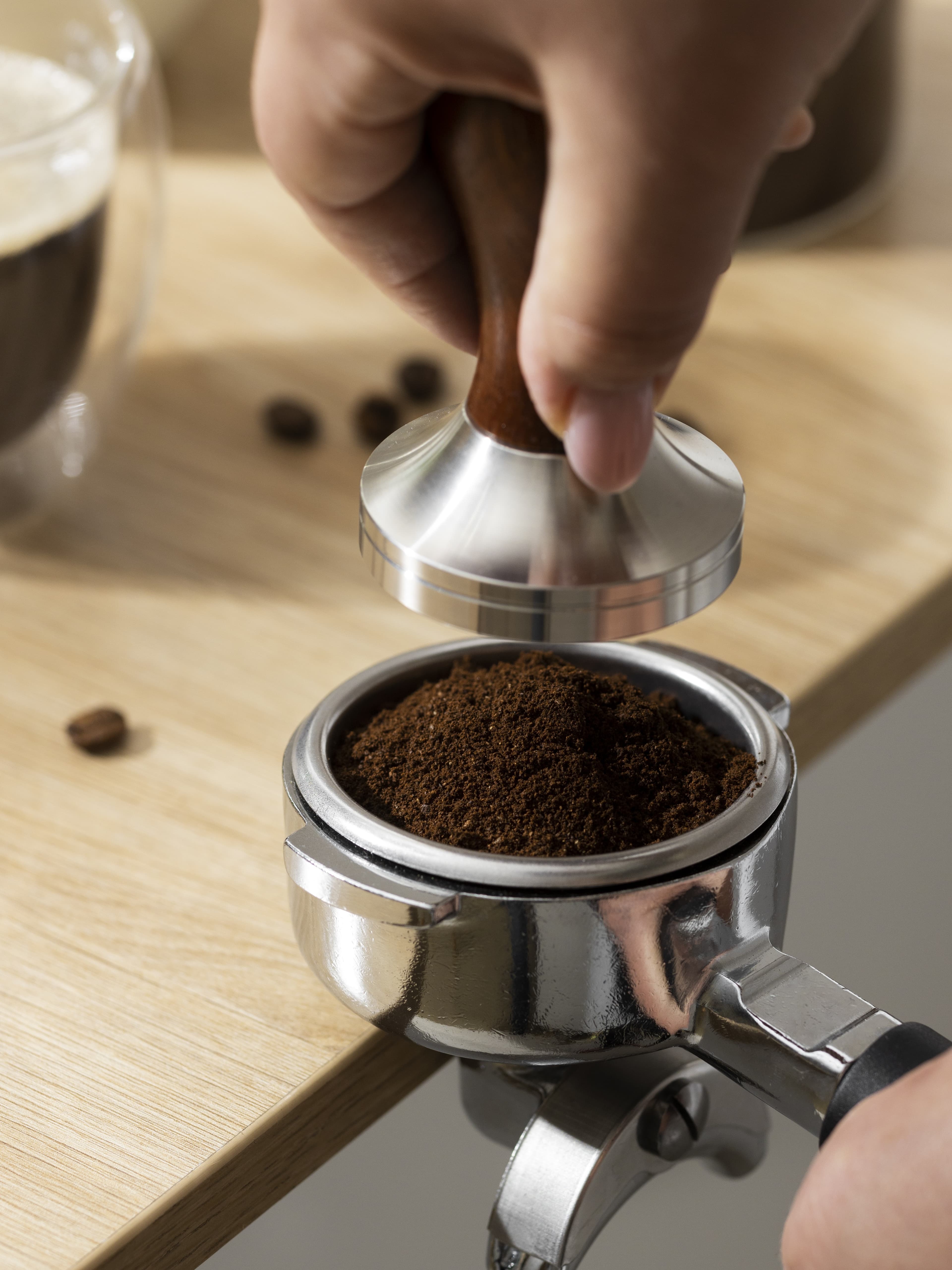
A bean-to-cup robotic barista does something sachets fundamentally cannot: it grinds fresh Arabica beans and pulls a real espresso shot for every single drink, in about the time it takes to boil a kettle.
Otter's machines use a blend of Brazilian and Indian Arabica, roasted locally in Malaysia. The milk is New Zealand dairy powder, which is a deliberate choice. Powder holds quality better than fresh milk sitting in a machine across multiple days, and Otter tested both before landing on it. That kind of honesty matters when you are deciding what goes in your team's pantry.
The drink menu covers a proper café range: espresso, americano, latte, café latte, vanilla latte, hazelnut latte, salted caramel latte, matcha latte, the signature Ottersaur latte, caramel macchiato, mocha, dirty matcha, hot chocolate (plain and flavoured), and a babyccino. Hot or cold, with adjustable sugar levels.
For a team with varied preferences, that range matters. The person who wants a strong black americano and the person who lives for a hazelnut latte are both covered from one machine.
Every drink is made through the same consistent process, so the result is repeatable. The same latte on Monday tastes the same on Friday. That kind of consistency is hard to achieve with sachets and impossible with café runs.
You can learn more about how the pantry model works at Otter's office coffee page.
The honest tradeoffs: where instant still wins
Instant sachets have genuine advantages and it would not be honest to skip over them.
Simplicity. There is nothing to service, nothing to refill beyond restocking a box, and no machine to worry about. For a very small office or a location where coffee is a low-priority afterthought, that simplicity is legitimately attractive.
Low entry point. You can start with sachets on zero setup effort. No decisions, no lead time, no arrangements.
No single point of failure. A machine can have a bad day. Sachets do not.
If your office has a small team, drinks very little coffee, or genuinely does not care much about coffee quality, sachets may be the right call. We would rather you make the right decision for your situation than push something that does not fit.
Cost and quality at different office sizes
Here is a directional way to think about the office coffee machine vs instant coffee question based on team size.
Small team (under 15 people). Sachet volume is low enough that the total spend stays modest. A managed machine might still make sense if coffee culture matters to your team, but the financial case is less clear-cut. Worth getting a quote and comparing, but do not feel pressure either way.
Mid-size office (20 to 50 people). This is usually where the numbers start to shift. Daily cup volume is high enough that sachet costs are meaningful, café runs are common, and the variety of coffee preferences is hard to satisfy from a box. A managed robotic barista starts to make real sense here, especially when you factor in that Otter handles all the servicing and stocking.
Larger floor (50 or more people). At this scale, the café run problem is significant and the demand on the pantry is constant. A single smart coffee machine in a well-placed spot becomes the kind of thing people actually talk about positively. The consistency and range that a bean-to-cup machine delivers at volume is something sachets simply cannot match.
For offices in Klang Valley, Penang, Perak, or Pahang, Otter can put together a pantry arrangement that fits your team size. See the coffee machine for offices in KL page if you are based in the Klang Valley area.
Maintenance and operations: who actually looks after it
This is the objection that comes up most often, and it is a fair one. The idea of adding a machine to the pantry raises an immediate question: who cleans it, who fixes it, and who do we call when something goes wrong?
With Otter's pantry model, that question has a simple answer: we do.
Our team stocks the machine with fresh beans and supplies on a regular basis. We handle all servicing and maintenance. If something goes wrong with the machine, we sort it. The office does not need a cleaning roster, a technician contact, or any operational role at all beyond enjoying the coffee.
The belief behind this is something the Otter team talks about openly: the technology is the easy part. The reason the coffee is consistent is the team behind the machine, not just the machine itself. A technician who picks up a late-night message about a drink tasting off, and an operations team that gets a replacement part to a machine fast when a sensor fails, is what actually keeps your pantry running.
You can read more about how this works at the office coffee page or explore the coffee machine rental page if you are thinking about different models.
Is a managed pantry service worth it for your office?
Here is the honest summary.
If your office has a meaningful number of daily coffee drinkers, if café runs are eating into team time, and if you want a pantry that people are genuinely glad to use rather than just tolerating, a managed robotic barista is worth serious consideration.
If your team is very small, drinks little coffee, or values simplicity above everything, sachets are a reasonable call and there is no shame in that.
The deciding factor is often not cost alone but the question of who manages the logistics. With the Otter pantry model, you are not adding a new operations responsibility to your admin team. You are removing one. We handle everything so your team just makes their drink and gets back to work.
Want to see what this looks like for your office? Head to our office coffee page and get in touch. A quick WhatsApp to +60 17 357 2087 or an email to hello@otterbarista.com is the easiest starting point. No pressure, just a conversation about what actually fits your team.