Office coffee machine Malaysia: the managed service your office actually needs
If you are reading this, someone in your office has probably already asked about the coffee situation. Maybe it is the instant sachets nobody actually likes but everyone tolerates. Maybe there is a jar of something on the pantry shelf that has been there long enough that nobody can remember who bought it. Or maybe there was a machine, it broke, and six months later it is still sitting there waiting for someone to call someone. Finding the right office coffee machine in Malaysia is less about picking hardware and more about figuring out who is going to take care of it.
This piece is for the admin, the HR manager, or the office manager who has been handed that question and needs a clear answer.
Why your office coffee situation probably needs fixing
The frustration is real. Instant sachets are fine in a pinch, but they are not the kind of thing that makes someone feel valued at work. A good cup of coffee in the morning is a small thing that lands well. The absence of it also lands, just in the opposite direction.
The other problem is ownership. Even if someone in the office is enthusiastic about getting a proper machine, who is actually responsible for it? Who restocks the beans? Who calls a technician when the grinder makes a noise? Who cleans it on a Friday afternoon when everyone just wants to leave?
These are the real questions behind the coffee question. And they are worth answering honestly before you commit to anything.
What to actually look for in an office coffee machine in Malaysia
For most offices, the practical criteria come down to a few things.
Drink variety. Your team is not all drinking the same thing. Some people want a straight espresso, some want a latte, some want something with more milk. A machine that only does one or two drinks will start feeling limited quickly.
Capacity for your headcount. A machine that works for a team of fifteen will not work for a team of a hundred and fifty. Think about peak periods, usually the hour after people arrive and the hour after lunch.
Ease of self-service. Nobody should need a tutorial. If the machine is complicated enough that people avoid it, you have spent money on something that just takes up counter space.
Who handles the rest. This is the one most people underweight. Restocking, cleaning, routine servicing, and repairs are not small tasks. If those responsibilities land on your team, the machine becomes a liability instead of a benefit. The most important question to ask any provider is simple: what happens after installation?
A managed service answers that last question before you even ask it.
Rent, buy, or managed placement: which model fits an office?
There are three ways offices typically approach this.
Buying means you own the machine outright. You own the asset, and you own every problem that comes with it. Repairs, parts, servicing, and replacement all sit with you. For some businesses this makes sense, but for most offices it adds an operational burden that nobody asked for.
Renting often includes some level of maintenance support, which is better. But rental agreements vary a lot in what they actually cover, and you are still the one making calls when something goes wrong.
Managed placement is the third model. The provider places the machine, stocks it, services it on a regular schedule, and handles repairs. Your team just uses it.
Otter Barista's pantry service runs on that third model. We do not just drop a machine and disappear. We keep it stocked, running, and tasting the way it should. For specific pricing, the right move is to request a quote because the setup varies by office size and location. You can do that at /office-coffee.
How Otter Barista's pantry service actually works
This is the part worth understanding in detail, because it is where the model is different from just renting a machine.
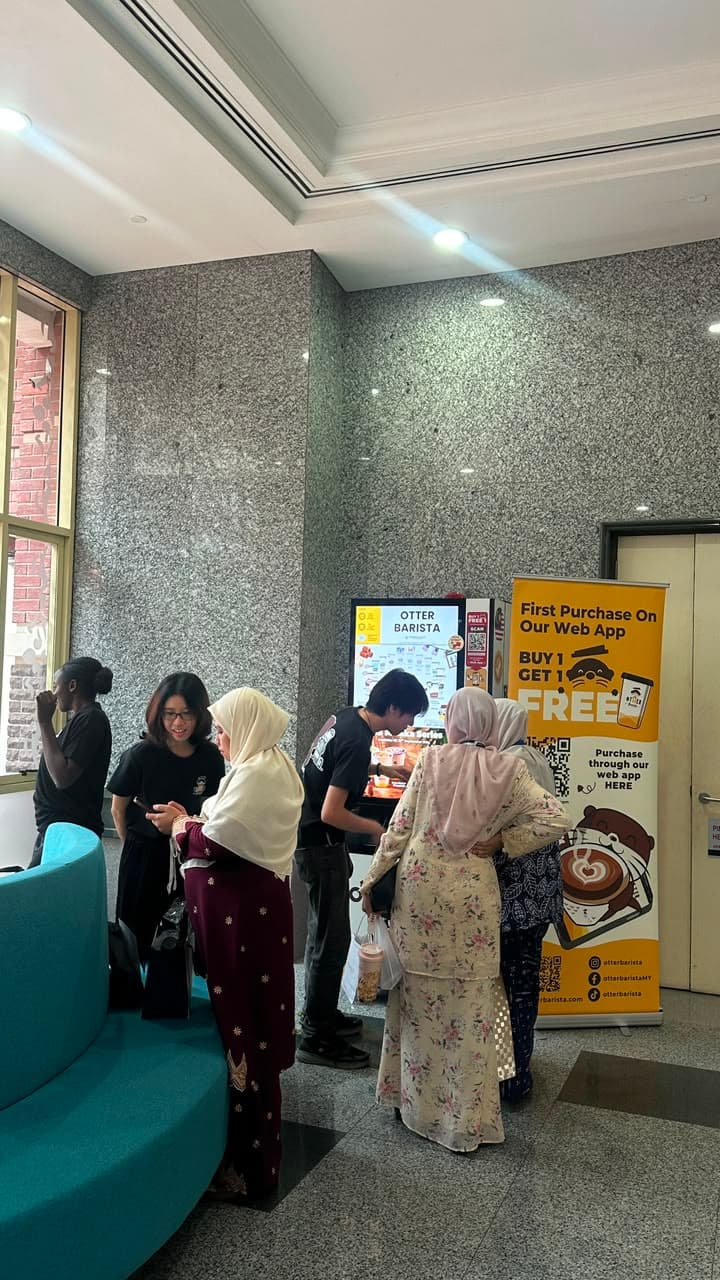
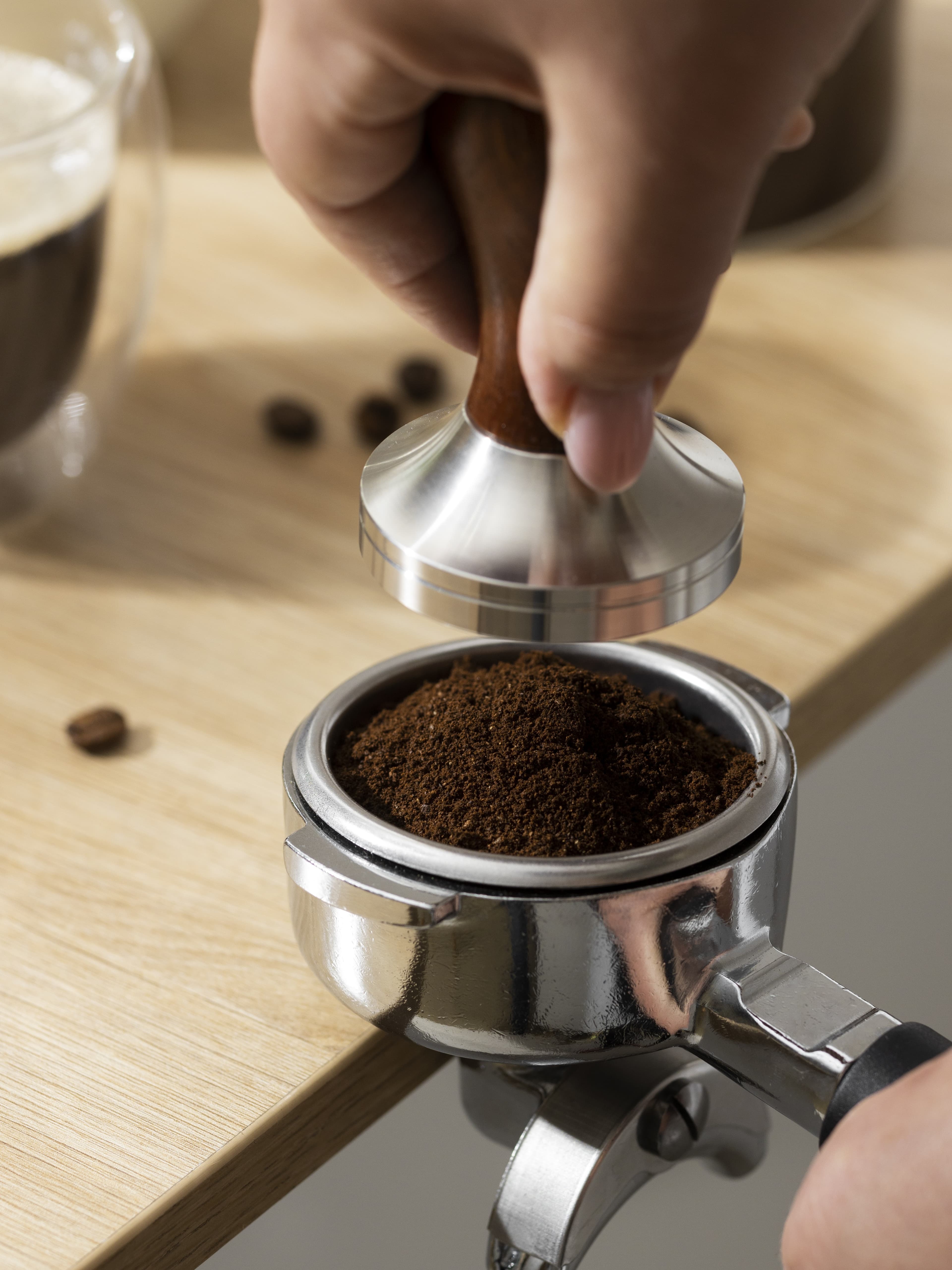
We place a robotic barista in your office. That machine grinds fresh beans on demand and pulls real espresso shots. The beans are 100% Arabica, a blend of Brazilian and Indian beans, roasted locally here in Malaysia. Not capsules, not instant. Fresh-ground, every cup.
The milk is New Zealand dairy powder. We want to be upfront about that because it is a fair question. We tested powdered milk against fresh milk in the machine and the powder won. Fresh milk sitting in a machine over days does not hold quality the way powder does. This was a deliberate quality choice, not a cost-saving shortcut. The cup you get is more consistent because of it.
A technician services every machine on a weekly basis. That covers cleaning, restocking, and a check of the machine's condition. If something goes wrong between visits, someone on our team picks it up fast. One example of how that works: a technician responding to a late-night message about a coffee tasting off. Another: an operations team getting a replacement part to a machine in another city quickly when a sensor fails. That kind of response is the actual product. The machine is the easy part.
The pantry service also connects to our web app at member.otterbarista.com, where your team can order and access a loyalty programme. It is a small detail that makes the experience feel less like a machine in a pantry and more like a coffee benefit your team actually uses.
If you want to understand the full placement model, /place-a-machine covers how we work with different kinds of locations.
The coffee your team will actually drink
Here is what comes out of the machine, specifically, because this matters.
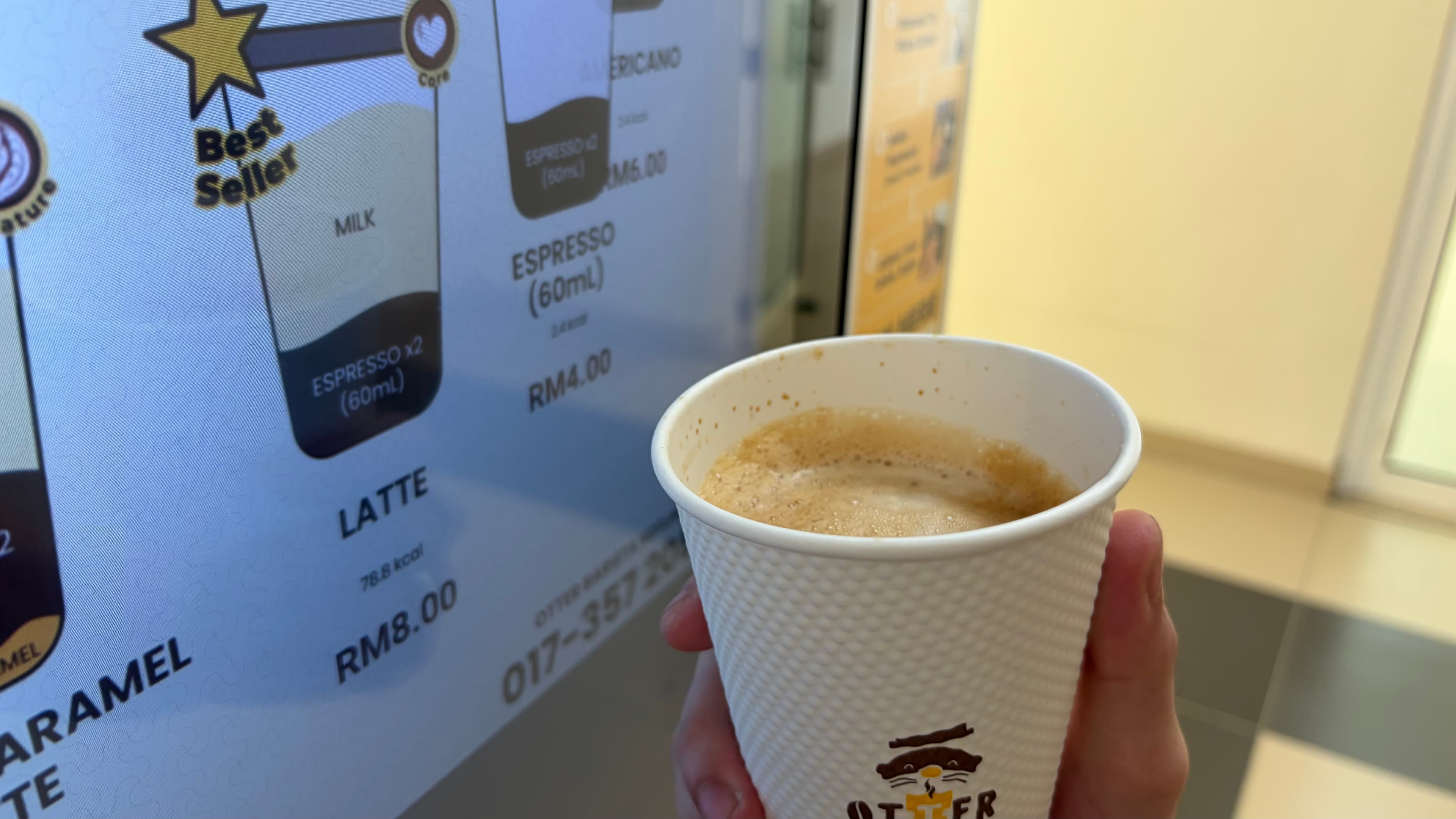
The machine grinds fresh Arabica beans and pulls an espresso shot as the base for each drink, which covers the usual café range of espresso and milk-based drinks like lattes, Americanos, and mochas. The flavour is consistent because the beans are consistent and the machine is serviced consistently.
The powdered milk produces good foam and integrates well with espresso. If your team has been drinking café coffee and you put this in front of them, they will recognise the quality. That is the point.
We are not pretending to be a café. We are a robotic barista in a workplace. But the coffee that comes out is made from real beans, ground fresh, pulled properly. That is a different category from anything instant.
How to get management to approve the budget
This section is for the person who has to make the internal case.
The argument is simpler than it might feel. Coffee is one of the lowest-cost, highest-visibility pantry benefits you can add to a workplace. Spread across headcount, the daily cost per person is small. The return, in terms of how people feel about coming into the office and the small signal it sends about how the business values the team, is disproportionately large.
When you present this to management or procurement, frame it as a pantry benefit with a managed service structure. It is not a capital purchase, and it is not a new task for your team. It is a provider relationship where the deliverable is good coffee in the office every day. For the HR or people team, there is a culture angle too: the quality of the day-to-day environment matters, and coffee is a tangible, daily expression of that.
For more context on how this works in office settings specifically, /coffee-machine-for-offices-kl has additional detail relevant to Klang Valley businesses.
Getting started: what the process looks like
The first step is a conversation, not a commitment.
You reach out, we learn about your office, we assess whether the setup makes sense for your location and headcount, and we propose something concrete. If it works, we handle deployment. If it does not, we will say so.
Otter Barista covers Klang Valley, Penang, Perak, and Pahang. If you are not sure whether we serve your area, ask. The team is easy to reach.
You can start the conversation at /office-coffee, or contact us directly:
- WhatsApp: +60 17 357 2087
- Email: hello@otterbarista.com
No hard sell, no long pitch. Just a practical chat about whether this fits your office. That is the right way to start.