Automatic coffee machine for office Malaysia: how to choose and what to ask
If you are looking for an automatic coffee machine for office use, you are probably not just looking for a machine. You are looking for a way to get café-quality coffee into your pantry without turning it into someone's full-time problem. That is the real situation most HR and admin teams face, and it is worth addressing honestly before talking about any specific product.
This guide covers the main machine types and how to match them to your office, how to think about sizing, what the Malaysia-specific context means for your decision, and why the team behind the machine matters more than the machine itself.
Why offices are moving past 3-in-1 sachets
The office pantry is not just a utility anymore. It has become part of how companies look after their teams. A nurse on a 12-hour shift, a developer on a tight deadline, or a sales exec jumping between calls all need something better than hot water poured over a sachet.
HR teams know this already. The sachets keep disappearing but no one is excited about them. Meanwhile, the café downstairs gets a lot of foot traffic during working hours, which means time out of the office and a slow drain on productivity. Bringing a proper coffee experience inside is not about being fancy. It is about being practical.
What type of automatic coffee machine actually fits your workplace
Before you commit to anything, it helps to understand the main categories and what each one actually means for your office day-to-day.
Bean-to-cup (robotic barista). These machines grind whole beans fresh for every single cup. They pull a real espresso shot and build the drink from there. No barista required, no pre-ground powder going stale in a hopper. The output is consistent and the drink range is broad, covering everything from a straight americano to a flavoured latte. The trade-off is that these machines have more moving parts, so regular servicing matters. For offices that want café-quality drinks with zero staff training, this is the category to look at.
Pod machines. Pre-portioned capsules make these very convenient to operate. Swap the pod, press a button, done. The limitations are drink variety (you are locked into whatever the pod range offers) and ongoing consumable waste. They suit small teams with simple tastes but can feel limiting once the team grows or people start wanting more than a black coffee.
Drip filter machines. These brew a jug of filter coffee, which sits on a hotplate until it runs out. Simple, low maintenance, and cheap to run. The obvious limitation is that you get filter coffee and nothing else. For offices where everyone drinks black coffee and variety is not a priority, this works fine. For offices where half the team wants a latte, it does not.
For most Malaysian offices, especially those with a mix of coffee drinkers, bean-to-cup is the option that covers the most ground without requiring a trained barista on staff. If you want to dig deeper into how these options compare on cost, the article on office coffee machine Malaysia goes into more detail.
How to size a coffee machine for your office headcount
Headcount is a starting point, but usage patterns matter more than raw numbers.
Under 20 people. A smaller team with consistent habits is usually straightforward to serve. The main question is drink variety. If everyone drinks black coffee, a pod machine or a small bean-to-cup unit works fine. If you have a mix of latte drinkers and espresso drinkers, a bean-to-cup robotic barista handles both without any extra effort.
20 to 60 people. This is where a capable bean-to-cup machine starts to earn its place properly. Peak-hour demand matters here. Think about what happens at 9am and after lunch. A machine that can serve cups quickly without a queue forming keeps morale up and disruption down. Drink variety also becomes more important at this scale because the range of preferences across 40 or 50 people is genuinely wide.
60 and above. At this scale, throughput and reliability are the most important factors. A machine that goes down unexpectedly affects a lot of people at once. This is where managed servicing becomes genuinely critical, not just convenient. You want a provider who responds fast and keeps downtime short, because the impact of a machine being offline in a 100-person office is very different from a 15-person one.
For hybrid offices, factor in actual attendance rather than total headcount. If your team of 60 is split across days, your average daily usage might look more like a 30-person office. Worth thinking through before you size up.
How an automatic coffee machine for the office actually works
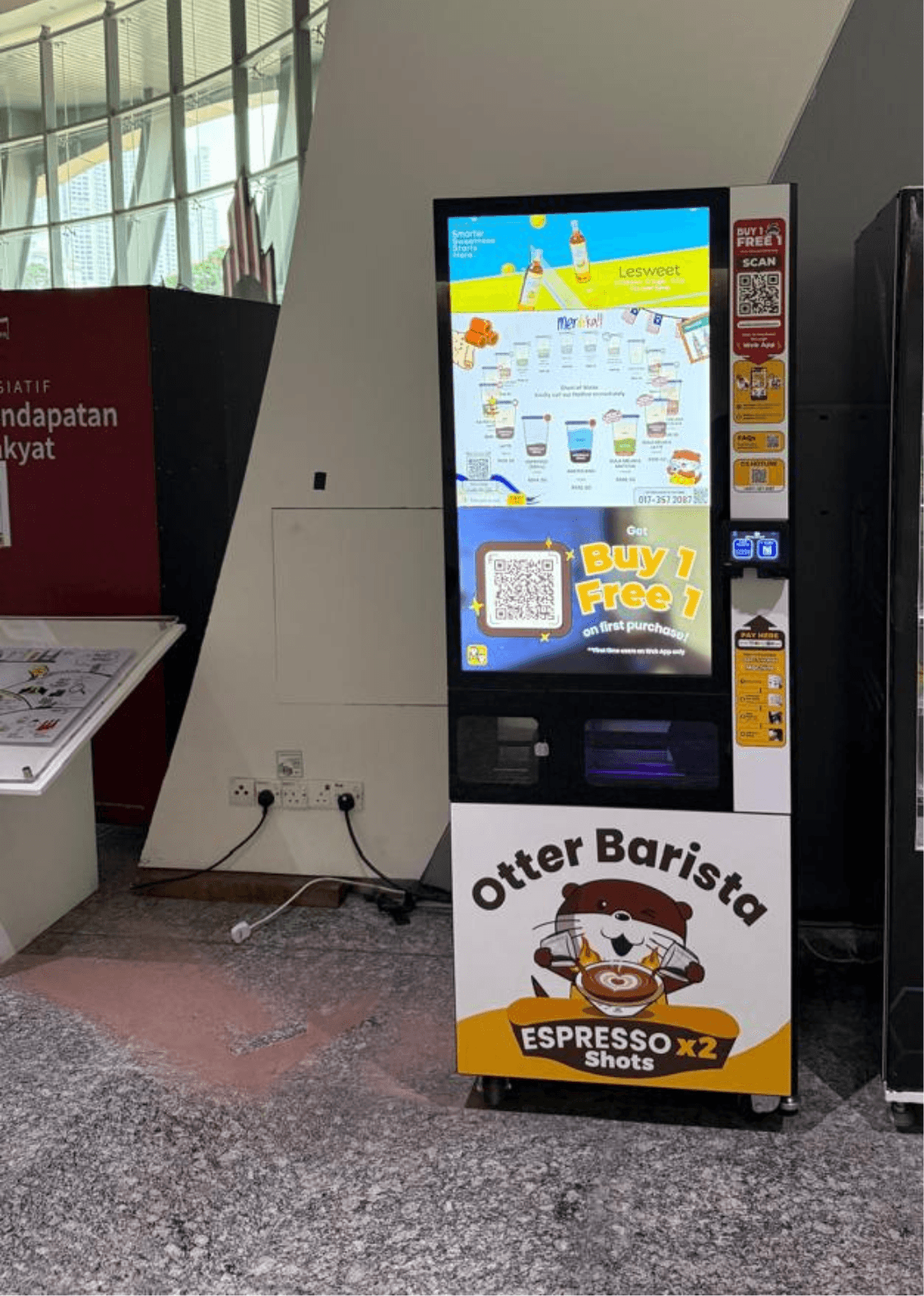
The bean-to-cup machines Otter Barista operates are robotic baristas. Every cup starts with whole Arabica beans being ground fresh right before the shot is pulled. There is no pre-ground powder sitting in a hopper going stale. The machine pulls a real espresso shot and builds the drink from there.
At Otter Barista, the beans are a blend of Brazilian and Indian Arabica, roasted locally in Malaysia. The milk used is dairy powder from New Zealand. That is a deliberate choice, not a cost-cutting measure. Fresh milk sitting in a machine for days is a quality problem waiting to happen. We tested both and the powder produced a more consistent result. We say this plainly because buyers deserve to know exactly what goes into their cup.
The drink range is broad: espresso, americano, latte, café latte, caramel macchiato, mocha, dirty matcha, hot chocolate (plain and flavoured), flavoured lattes including vanilla, hazelnut, salted caramel, matcha, and the signature Ottersaur latte, plus a babyccino. Everything comes hot or cold, with adjustable sugar. No barista needed, and no training required for the team using it.
Malaysian office coffee considerations you will not find in a global guide
Most buying guides for office coffee machines are written for a generic international audience. A few things matter specifically in Malaysia that those guides do not cover.
Water hardness and descaling. Malaysian tap water hardness varies by area, and harder water accelerates limescale build-up inside a machine. Left unmanaged, this affects taste consistency and shortens the machine's working life. In a managed service arrangement, the provider handles descaling as part of the regular servicing schedule. Your office team does not need to track it, remember it, or do it.
Humidity and bean freshness. Malaysia's humidity is hard on coffee beans. Beans left open or stored poorly go stale faster than they would in a cooler, drier climate. Otter Barista roasts locally in Malaysia and manages the supply chain to the machine, so beans arrive fresh and are used before they deteriorate. This is one reason local roasting matters more here than it might elsewhere.
Local drink preferences. The Malaysian office is not a drip-coffee culture. Milk-based espresso drinks, lattes in particular, dominate. A machine that serves only black coffee or only a narrow pod range will not satisfy most Malaysian teams. The Otter Barista drink menu is built around this reality, covering the full latte range alongside espresso-based drinks and flavoured options.
Halal considerations. For offices with Muslim staff, the ingredients in any coffee service matter. Otter Barista uses a Brazilian and Indian Arabica bean blend and New Zealand dairy powder. Buyers with specific Halal certification requirements should raise this directly when requesting a quote so we can address it clearly for your situation.
Rental versus buying outright: what makes sense for most Malaysian offices
For most offices, a managed service makes more sense than buying a machine outright.
When you buy, you own everything that comes with it: the capital cost, spare parts, the maintenance schedule, and every decision about what to do when something stops working on a Friday afternoon before a client visit. Someone on your team has to own that problem, and it is almost never the person who originally requested the machine.
A managed pantry service works differently. Your business covers the cost of the service. The provider deploys the robotic barista, keeps it stocked, services it regularly, and responds when something goes wrong. No capital expenditure, no machine-ownership headaches, no internal technician.
The total cost comparison goes beyond price per cup. Factor in what your admin team spends managing sachets: ordering, storing, chasing deliveries. Factor in the time employees spend walking to a café when the pantry offering does not meet expectations. These are real costs that do not show up on a sachet invoice but add up across a team over months.
Getting management or finance to approve it. The framing that tends to work is straightforward. A managed service avoids capital expenditure because the machine is part of the service, not a purchase. The productivity argument (employees staying in the building rather than making café runs) is concrete and easy to illustrate with a headcount estimate. The admin burden reduction is real and quantifiable for anyone who has managed sachet procurement. For specific numbers to put in front of finance, a quote conversation is the right starting point. We do not publish fixed pricing because it varies by office size, location, and usage.
You can read more about how Otter Barista structures the pantry arrangement on our office coffee page and the coffee machine rental page.
What to check before you commit: capacity, drink variety, and space
Before you sign anything, three practical questions are worth working through.
How many cups does your team actually need each day? Headcount is a starting point, but usage varies. Think about peak times, not just averages. A hybrid team of 40 where only 20 are in on any given day behaves very differently from a full-attendance team of 40.
What does your team actually drink? If your office has a mix of people who want a straight black and people who want a matcha latte or a flavoured hot chocolate, you need a machine with enough drink variety to serve all of them. The Otter Barista drink menu covers espresso through to flavoured lattes, dirty matcha, hot chocolate, and more, so most teams are covered.
How much space do you realistically have? A robotic barista sits on a countertop and does not need a full café fit-out. It needs a power point, a water connection, and enough surface space to operate comfortably. If your pantry is tight, send a photo to the provider before anything is agreed. It saves everyone time.
Who handles restocking and maintenance, and why it matters more than the machine
Here is something that does not get said enough in this category: the machine is the easy part.
Every decent smart coffee machine will grind a bean and pull a shot. What separates a good coffee service from a frustrating one is the team that keeps the machine running. Beans run out. Sensors fail. A cup tastes off and someone needs to figure out why. When these things happen, the question is whether someone responds quickly or whether your team is left waiting.
At Otter Barista, this is the actual work. We have had technicians respond to late-night messages about a machine that was not performing right. We have shipped replacement parts to machines in other cities when a component failed mid-week. That kind of response is not an upsell. It is how we operate, because we know that when your coffee goes down, it affects the whole office.
For any managed coffee service you are considering, this is the most important thing to ask: what happens when something goes wrong, and how fast do you respond?
You can find more on how we think about service on our resources page.
What Otter Barista's pantry service looks like in practice
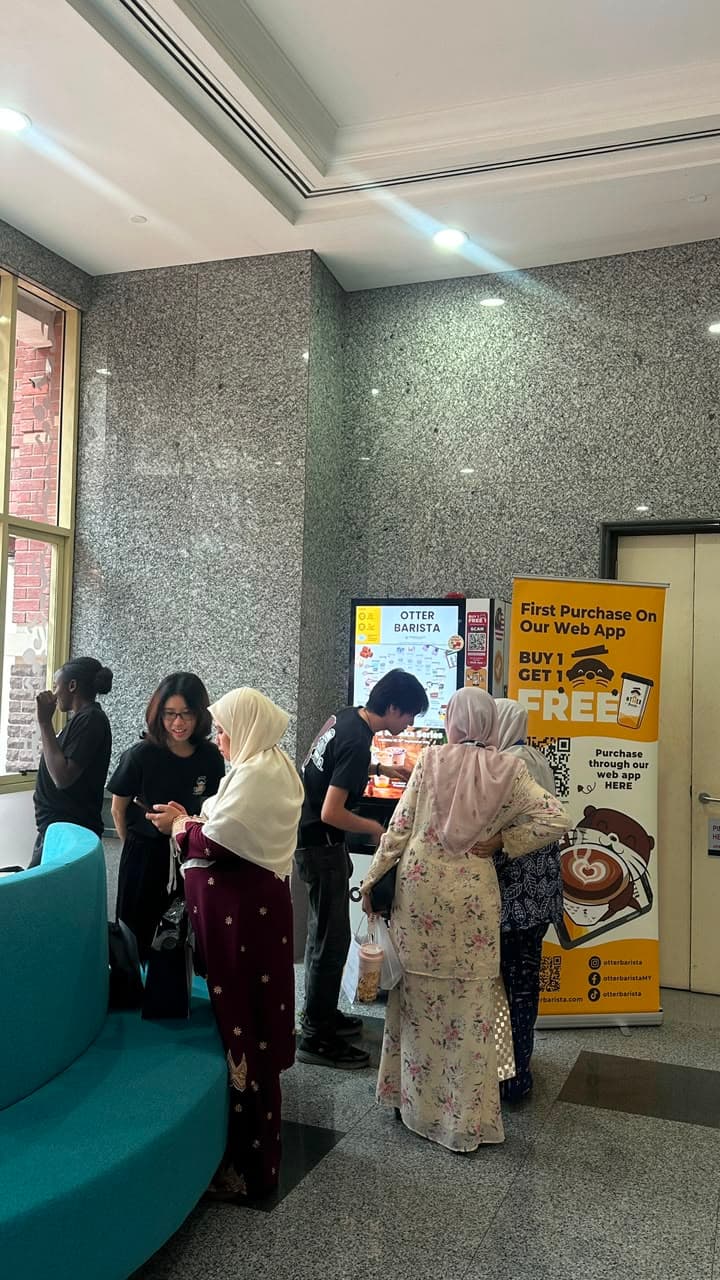
The pantry model is straightforward. Your business covers the cost of the service. Otter Barista supplies the robotic barista, keeps it stocked with freshly ground Arabica and New Zealand dairy powder, and services it on a regular schedule. You get café-quality coffee in your office without any of the machine-ownership headaches.
The drink menu covers the full range: espresso, americano, latte, café latte, caramel macchiato, mocha, dirty matcha, vanilla latte, hazelnut latte, salted caramel latte, matcha latte, the Ottersaur latte (our signature), hot chocolate in plain and flavoured varieties, and a babyccino. Hot or cold, adjustable sugar.
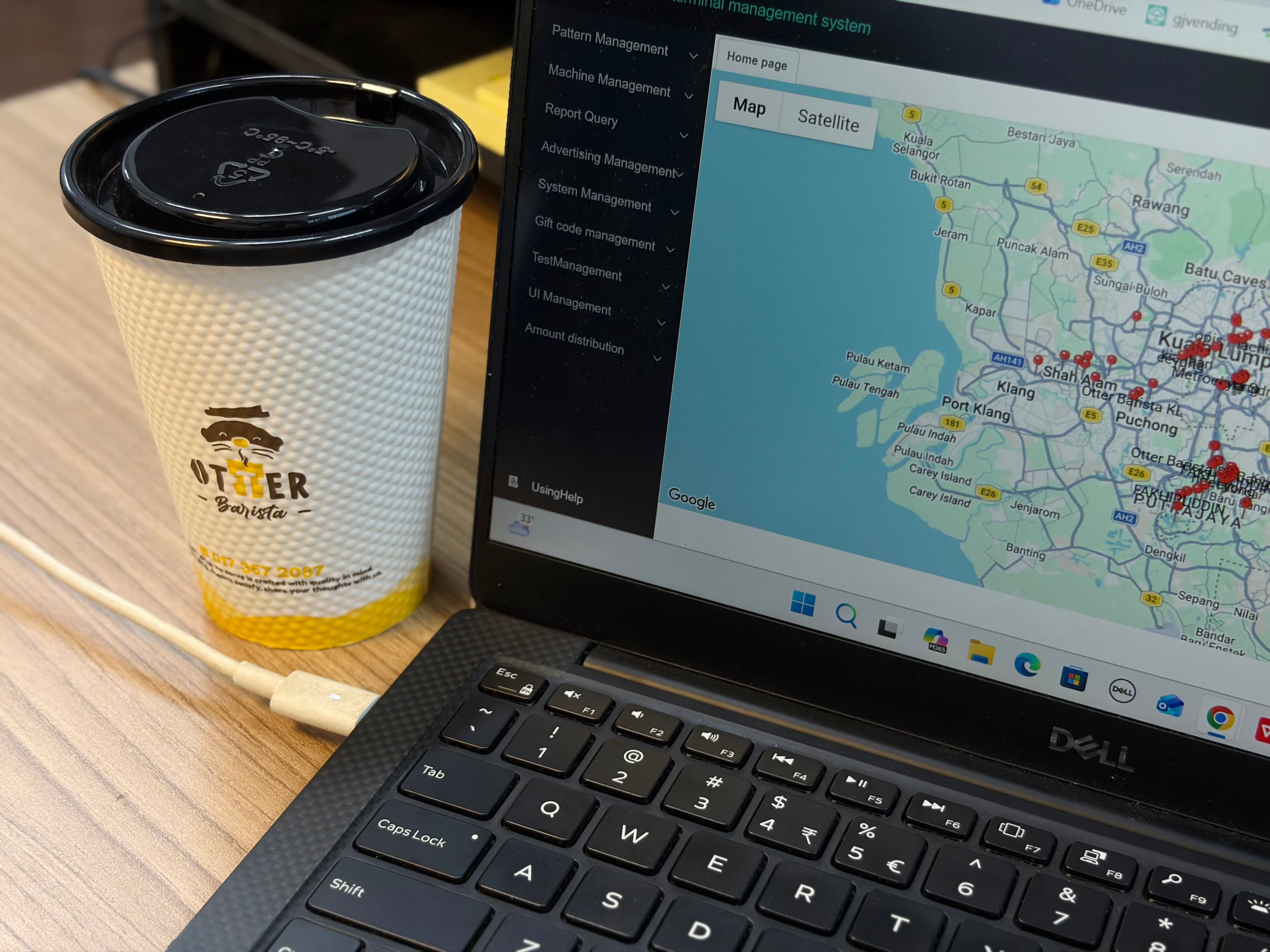
We currently serve offices and workplaces across Klang Valley, Penang, Perak, and Pahang. Pricing varies depending on location and usage, so we route everyone to a quote rather than publishing a fixed rate. If you are based in the Klang Valley specifically, the Kuala Lumpur office coffee page has more detail relevant to your location. For a broader look at how the rental model works, the article on coffee machine rental Malaysia is worth a read.
How to get started
If your office is ready to move past sachets, the next step is simple. Drop us a message on WhatsApp at +60 17 357 2087 or email us at hello@otterbarista.com. Tell us roughly how many people are in the office, what region you are in, and what you are hoping to achieve. We will take it from there.
No long-form commitment needed to start the conversation. Just a short chat to see whether it makes sense for your team.
Talk to us about office coffee and we will get back to you quickly.