Coffee machine for hospital: what to look for and how the host model works
A hospital does not stop. Nurses rotate through 12-hour shifts, families sit in waiting rooms at 2am, doctors grab a quick cup between back-to-back rounds, and admin staff power through long days behind a desk. A coffee machine for hospital use is not a perk. It is a piece of operational infrastructure that needs to work every hour of every day, for an unusually wide mix of people, without adding a single task to your already stretched facilities team.
This article is written for facilities managers, procurement officers, and anyone responsible for making that happen. We will cover what to actually look for, why hygiene and servicing matter more in a clinical setting, and how the host placement model removes the operational weight from your side entirely.
What makes a hospital different from other locations
Most workplaces have predictable footfall and a relatively uniform audience. A hospital has neither. You have clinical staff on rotating shifts, administrative teams on standard hours, patients with varying mobility, and a constant stream of visitors who have never used your machine before and will not be reading instructions.
That mix demands a machine that is genuinely easy to use, consistently reliable, and fast enough to handle peaks without queuing becoming a problem. It also demands a supplier who understands that downtime at midnight is not a minor inconvenience. It is a real problem for a team that is already working hard.
What to look for in a coffee machine for hospital placement
When you are evaluating options, the practical questions matter more than the product brochure. Here is what actually counts:
Ease of use for a wide audience. Staff will figure out any machine with a little time. Visitors and patients often will not. The interface needs to be clear, the steps need to be minimal, and the output needs to be consistent regardless of who is pressing the buttons.
High-volume reliability. A hospital canteen or main lobby can push through a lot of cups across a 24-hour period. The machine needs to handle that without degrading in quality or requiring manual intervention between uses.
Cashless and contactless payment. Cash handling in a clinical environment creates friction. A machine that supports cashless payment suits the full range of users, including patients who may not be carrying a wallet.
No internal maintenance burden. Your team is not a coffee technician team. The right machine comes with a supplier who handles restocking, cleaning, and servicing entirely on their side. If your staff are being asked to wipe down the machine or top up the beans, that is the wrong model.
A supplier who actually responds. This is the one that is hardest to assess from a brochure, and the one that matters most. We will come back to it.
Hygiene in a clinical environment
This is worth naming directly. Hospitals hold hygiene to a higher standard than most other environments, and rightly so. A coffee machine that sits unserviced for weeks, with old grounds, a neglected drip tray, and inconsistent cleaning, is a genuine concern in a setting where infection control is taken seriously.
The answer is not to avoid coffee machines. The answer is to choose a supplier whose servicing schedule is rigorous and whose team is accountable for it.
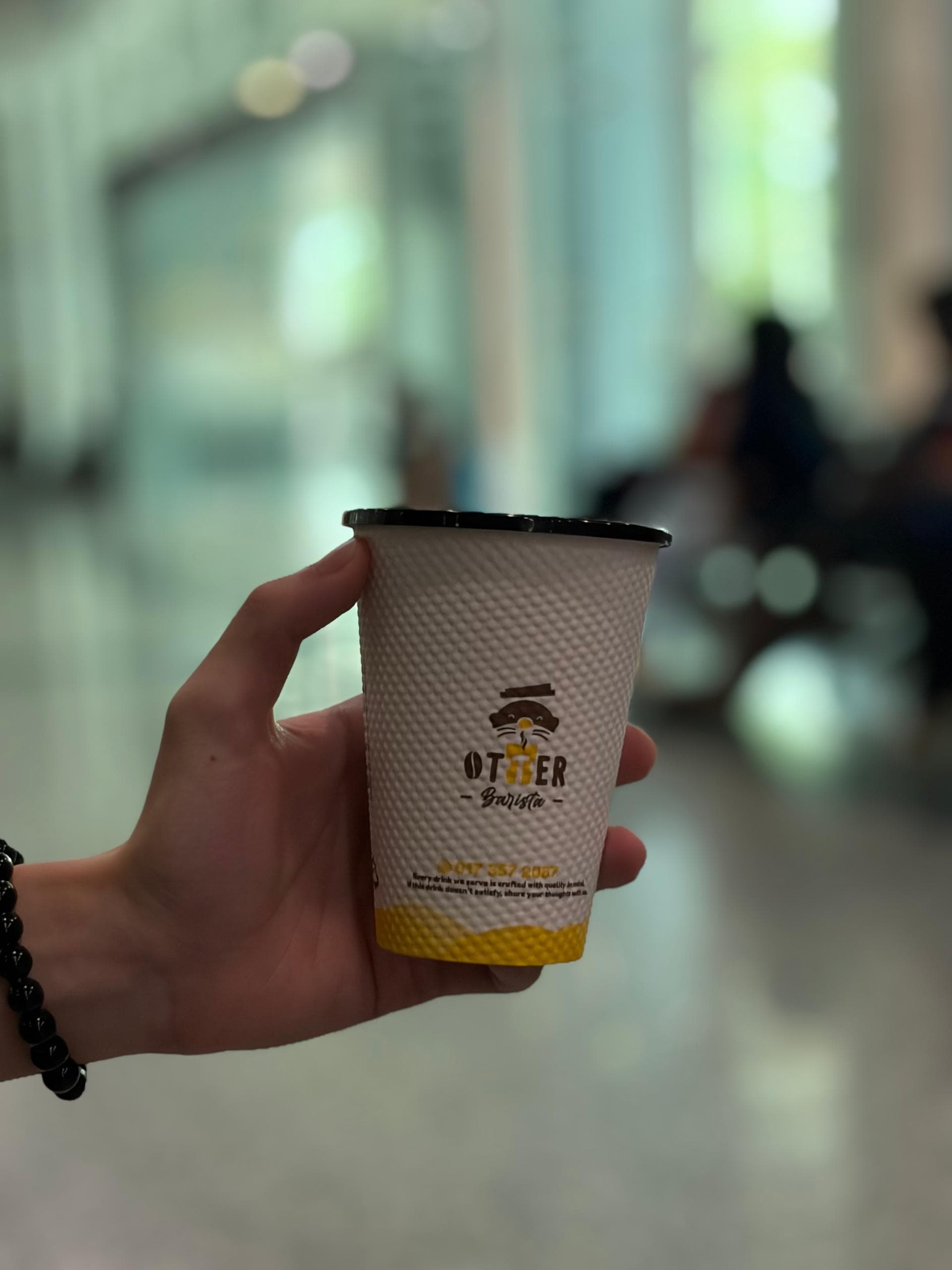
At Otter Barista, our team services every machine every week. That is not a marketing line, it is how the model works. We do not install a robotic barista and leave it to run. We show up regularly, we handle the cleaning and restocking ourselves, and we are reachable when something feels off. For a hospital environment, that frequency of hands-on care is exactly what the setting requires.
How the host model works for hospitals
The host placement model is built for locations that want the coffee without the overhead.
Here is how it works. Otter Barista places a robotic barista at your location at no capital cost to the hospital. We deploy the machine, we stock it, we service it, and we manage all operations. Your procurement team does not need to budget for machine purchase, installation, or ongoing maintenance contracts. In return, the hospital receives a fixed monthly rental.
That is the full picture. Fixed monthly income, zero operational responsibility on your side, and a supplier who runs everything. There is no revenue-share arrangement, no hidden variables. You know what you receive each month.
For a facilities manager juggling a long list of responsibilities, the appeal is straightforward. You are adding a service that staff and visitors genuinely value, and you are not adding it to your to-do list.
You can find more detail on how placement works at /place-a-machine.
The coffee itself: what staff and visitors actually get
The machine grinds fresh Arabica beans for every single cup. No instant powder, no pre-ground batch from last week. The beans are a blend of Brazilian and Indian Arabica, roasted locally in Malaysia.
The milk is dairy powder from New Zealand. We are upfront about that because it is a deliberate choice. Fresh milk sitting in a machine across a 24-hour period does not hold quality well. We tested both and the powder gave the more consistent result. For a hospital environment where the machine may run from 6am to midnight without intervention, that consistency matters.
The drink menu covers espresso, americano, latte, flavoured lattes (vanilla, hazelnut, salted caramel, matcha, and our signature Ottersaur latte), caramel macchiato, mocha, dirty matcha, hot chocolate, and a babyccino. Hot and cold options are available, with adjustable sugar levels. That range suits a hospital audience well because the people using the machine have genuinely different preferences and needs.
If your team has questions about ingredient suitability for your hospital's procurement requirements, reach out to us and we will give you the specifics.
Where machines can be placed inside a hospital
Placement depends on your layout and where the footfall actually is. A few zones that work well in practice:
Main lobby or entrance. The highest-traffic area for visitors, outpatients, and staff arriving for their shift. A machine here serves the widest possible audience and is visible enough that people will use it.
Staff room or pantry. A dedicated machine for clinical and administrative staff means they do not have to leave the floor to get a decent cup. For a nurse in the middle of a long shift, that matters.
Canteen or food court. If the hospital has a central eating area, a robotic barista there complements whatever food offering already exists, without requiring you to set up a full café counter.
Each zone has a different use pattern. The lobby machine will see spikes at visiting hours. The staff pantry will see spikes at shift changes. We can talk through placement based on your specific building if that is useful.
For more on how Otter approaches coffee in workplace and facility settings, the /office-coffee page gives a broader picture, and /coffee-machine-rental covers the rental model in more detail.
What happens when something goes wrong
This is the part that separates a good supplier from one that looked good on paper.
A hospital runs 24 hours a day. If a machine goes down at 11pm on a Friday, the people who needed that coffee still need it. A supplier who only responds during office hours on Monday is not the right fit for a clinical environment.
Our operations team responds when things go wrong, including after hours. When a part fails and needs to be shipped to a machine in Perak or Pahang, we move quickly to make that happen. The reason our coffee stays consistent across locations in Klang Valley, Penang, Perak, and Pahang is not the machine itself. It is the team behind the machine, and how seriously they take the responsibility.
We believe the technology is the easy part. The hard part is the team that shows up, responds, and keeps things running. That is where we put our effort.
Getting started
If you are evaluating a coffee machine for hospital placement and want to understand whether the Otter Barista host model fits your location, the straightforward next step is to start a conversation with us at /place-a-machine. You can also reach us on WhatsApp at +60 17 357 2087 or by email at hello@otterbarista.com. Tell us about your location and we will take it from there.